Blog

  • Casper the White Rocket – How We Found Bill’s Second Pony

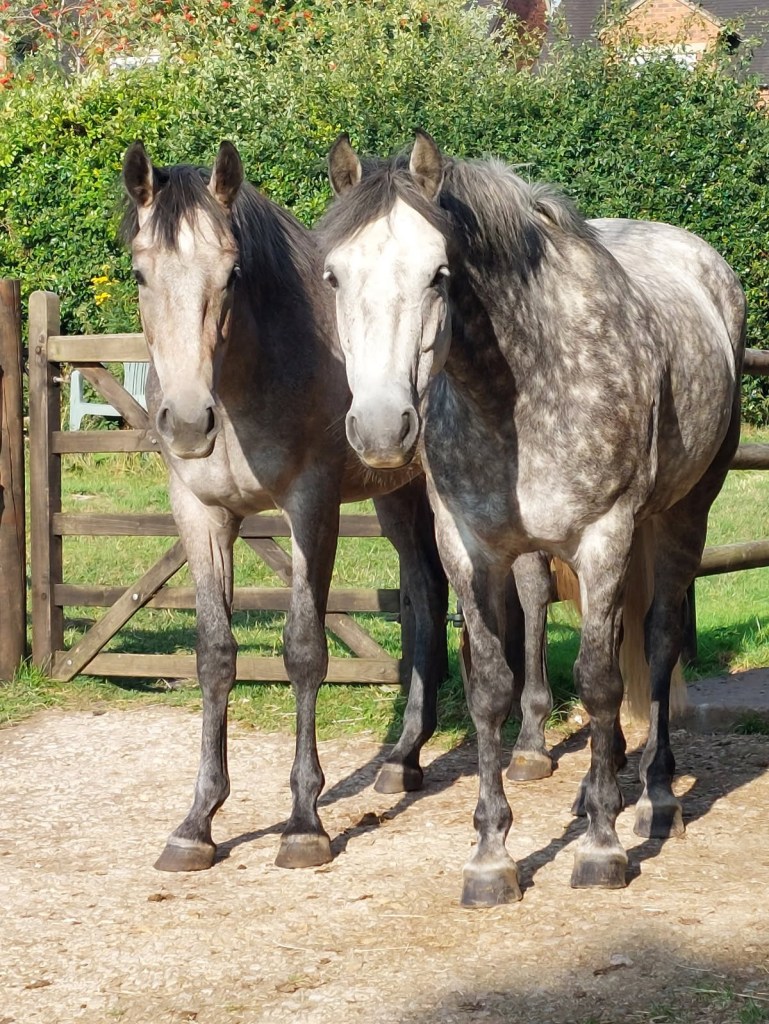
    Introducing Casper – The White Rocket (aka Clive)

    Hindsight is a wonderful thing. Looking back now, I can see that Casper should never have come home with us as 11-year-old Bill’s second pony.

    At the time, life felt overwhelming. In 2021, Dad had been diagnosed with cancer. He lived in the house joined to ours and was a huge part of our lives. We supported and nursed him until the end in May 2023. This had a profound effect on all of us, including Bill, who was wonderfully attentive – always on hand to straighten blankets and fetch remote controls.


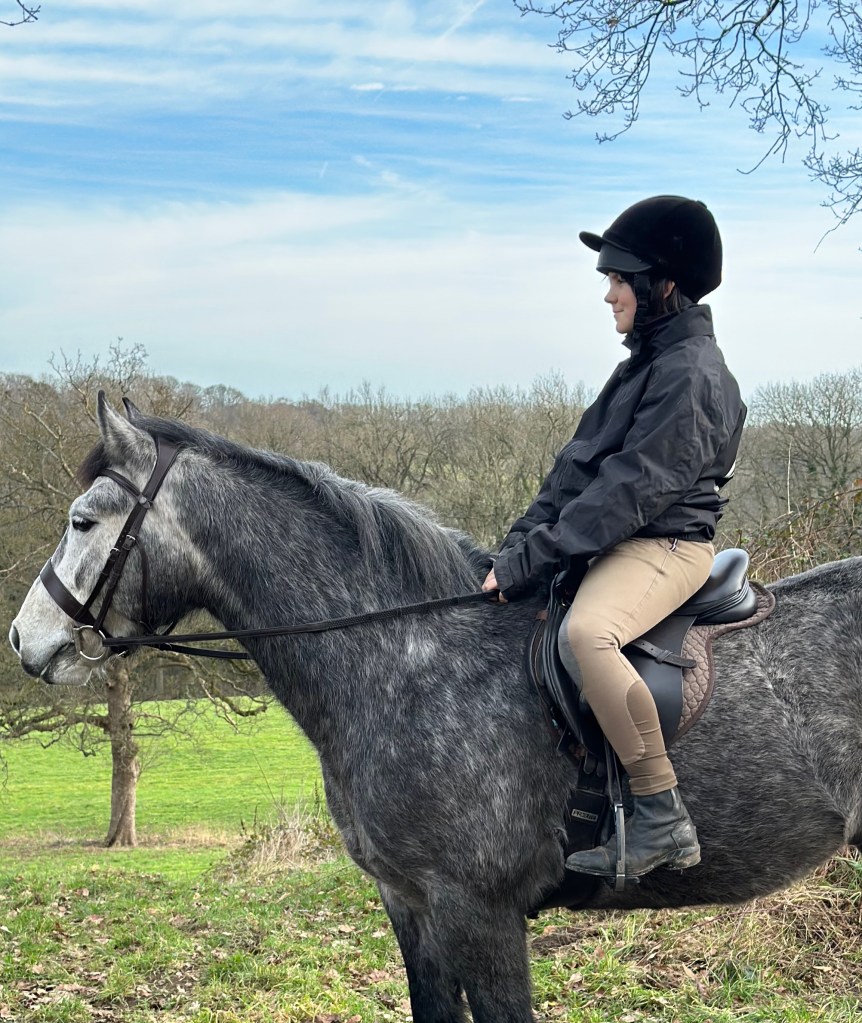
    Bill’s first sit on Casper – June 2022

    A Difficult Time with Jellytot

    As if that wasn’t enough, our little cob Jellytot suffered too. Somehow (I suspect a dewormer) his kidneys were severely damaged, which led to laminitis in his hind feet. As soon as we began treatment, I knew it meant Jelly would eventually need to find a new home. Our paddock is rich in clover, and Jelly was never one for being shut in the stable alone while watching his friends out on the green stuff.

    The Search Begins

    So, come June 2022, the search began for another pony. If you ask me now whether buying a pony a month after losing your father is a good idea, the answer would be a definite no! But at the time, it felt like the only thing to do.

    It was a crazy period – Covid and lockdowns were still in full swing, and pony prices were astronomical. I searched and searched, but most were far out of our price range, and if they weren’t, they sold instantly.

    Meeting Casper

    One day, I spotted an advert for what seemed like the perfect second pony. He was described as suitable for Pony Club activities and low-level competitions, and – it seemed like fate – he was only 30 minutes away. Viewings were due to start the following weekend, so we made sure we were first in line.

    We went to try him. He was quite forward, a big step up from our steady cob, but Bill sat quietly and comfortably on him in both the school and the field. His back was lower than I would have liked and I wanted to get him out of the Pelham and Grackle noseband as soon as possible – we tried him without both, he went well. I could see there was potential for a good partnership in the future. He passed his vetting, and home he came.


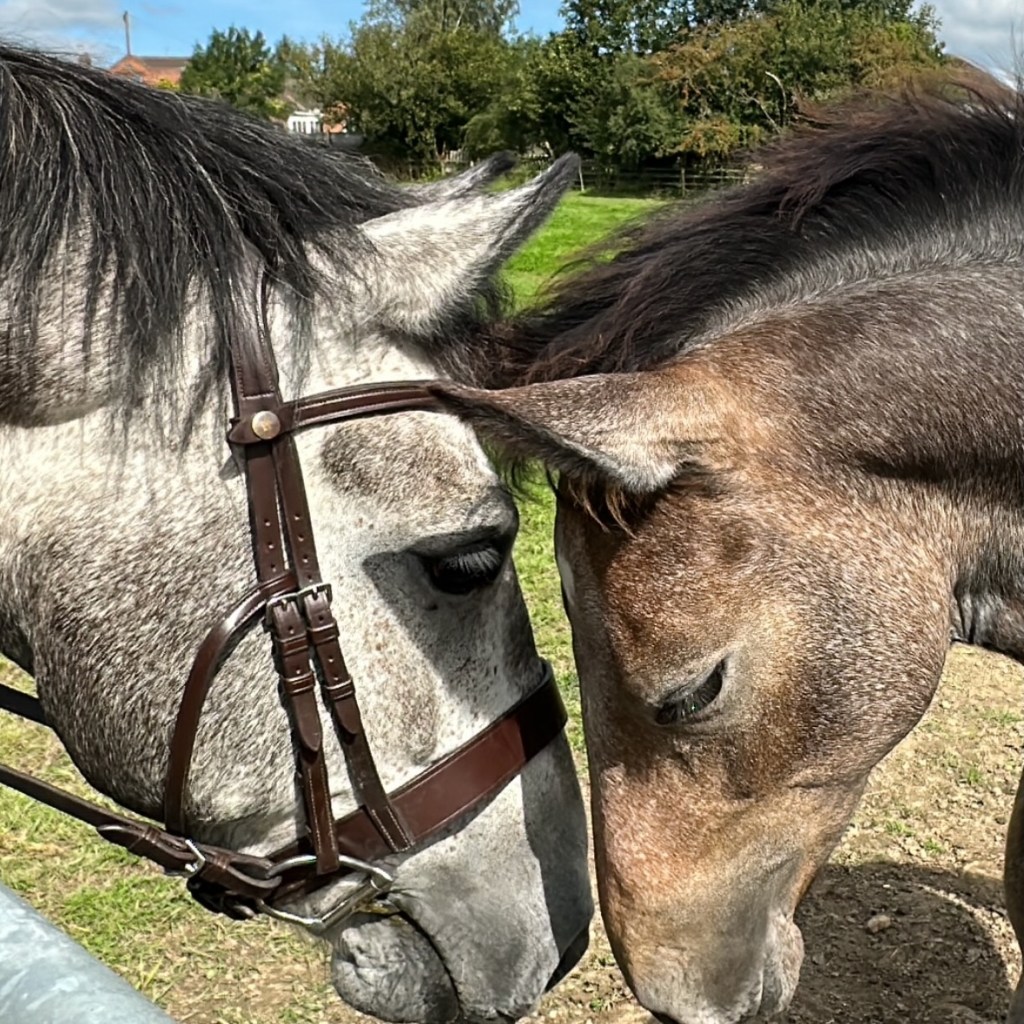
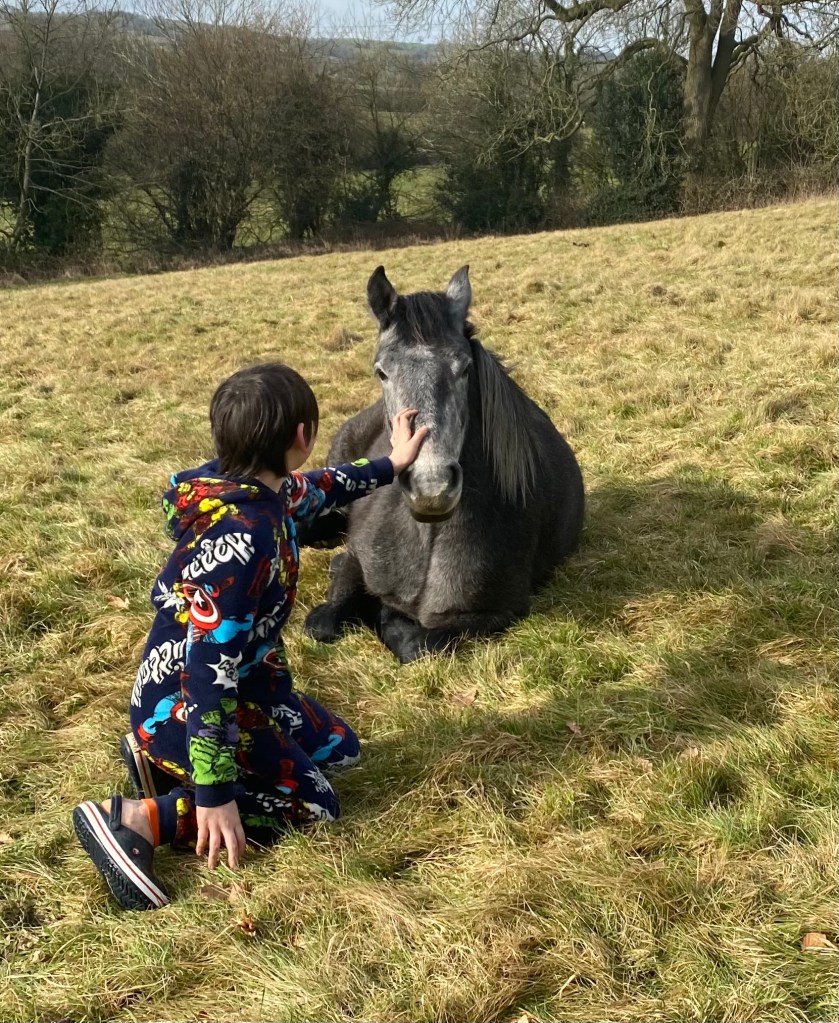
    The first meeting of our two boys

  • Mac’s KPU Journey – One Year On: Progress and Positive Changes (August 2025)

    Where Are We Now?

    It’s now a year since meeting Alex and beginning treatment for KPU, and both Mac’s wider team and I feel there have been very positive changes over the last 12 months.

    On the ground, he is bright and interested again, carrying his head higher and showing more flexibility through his shoulders. This translates into his ridden work, where he feels brighter, holds himself better through the front end, and is able to flex more easily through his shoulders and neck.

    He also seems less affected by the weather and is now in a more manageable work pattern. At weekends he enjoys two to three-hour fun rides, and during the week he hacks three times.
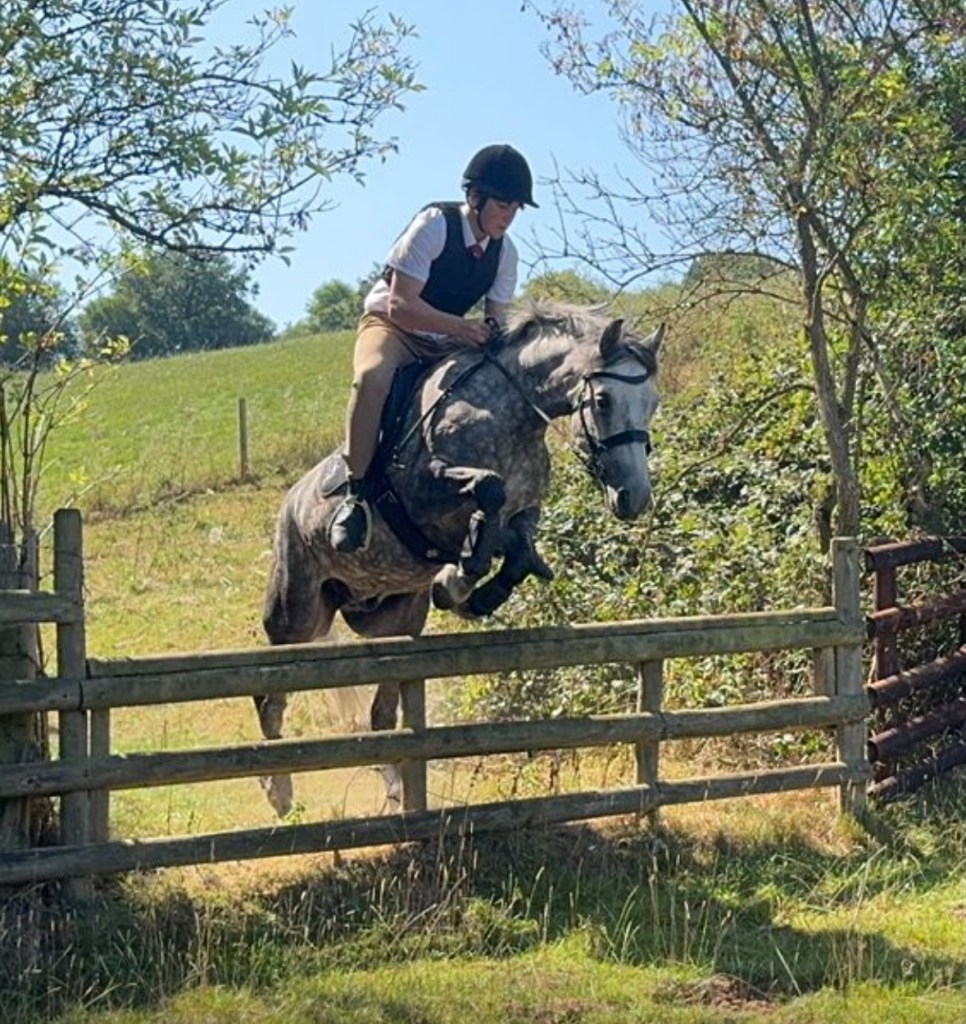
    Bill and Mac – fun ride August 2025

    On Friday we returned to Lindsay, who was keen to assess Mac again as I’d been keeping her updated on his progress over the summer.

    We began with groundwork: large circles in trot and canter to loosen him up, before moving into smaller circles in a very steady trot with his head low. The aim of these exercises is to encourage Mac to release through his spine and lumbar region. There were plenty of visible releases, including softening through his jaw and mouth.
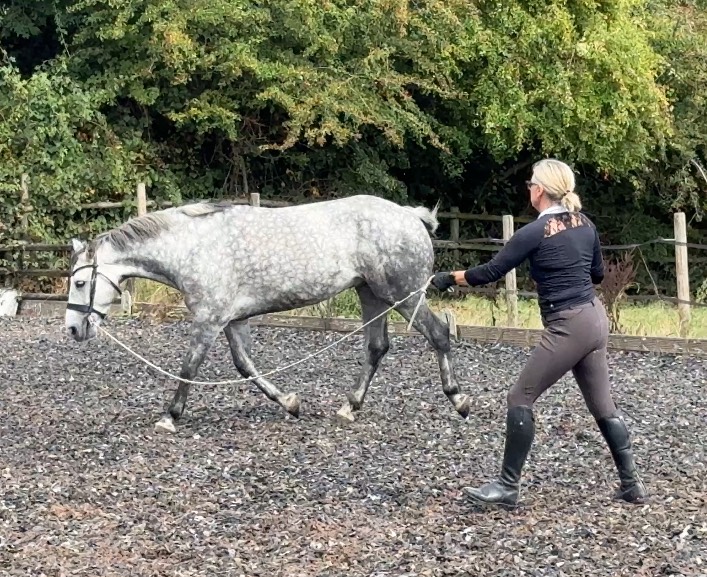
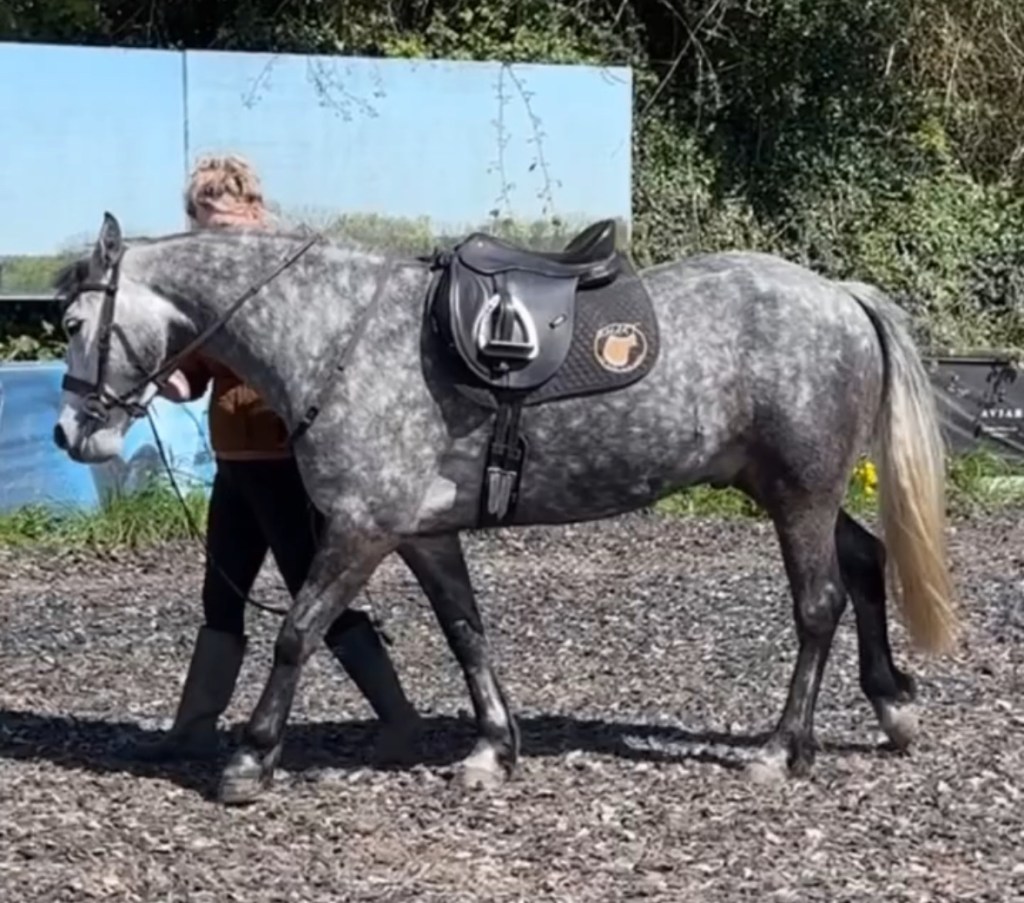
    Trotting in a large circle encouraging head low

    When a horse relaxes the jaw and tongue, it does much more than ease tension in the head. This area is connected to the rest of the body via the hyoid apparatus – a small set of bones that support the tongue and link, through muscles and fascia, to the skull, neck, sternum, shoulders, and indirectly to the hindquarters. Because of this connection, a release in the jaw can influence balance, posture, and movement through the whole body. Restrictions in this area may limit freedom in the shoulders and reduce overall coordination, while relaxation supports freer, more balanced movement from poll to hindquarters.
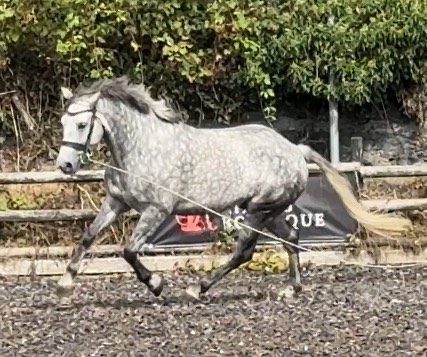
    Canter work from the ground

    With the groundwork going well, we tacked up and worked briefly under saddle. We started with some walking and trotting with head low, then moved on to quarter turns around the forehand using a block as a marker. This simple exercise has many benefits: it improves suppleness by encouraging Mac to release through his neck, shoulders, and hindquarters, while also building strength as he crosses and engages his hind legs. It helps balance and coordination by teaching him to shift his weight and pivot around his front legs, and it also increases responsiveness to leg aids. Importantly, turns on the forehand lay the foundation for more advanced lateral movements and collection, making them an excellent tool for developing flexibility and preparing for future schooling.

    We kept the ridden session short — just 10 to 15 minutes — and were both pleased with how he went. My homework for the week is to continue with the groundwork and add a small amount of ridden work. We’ll return to Lindsay next Friday to build on this progress.

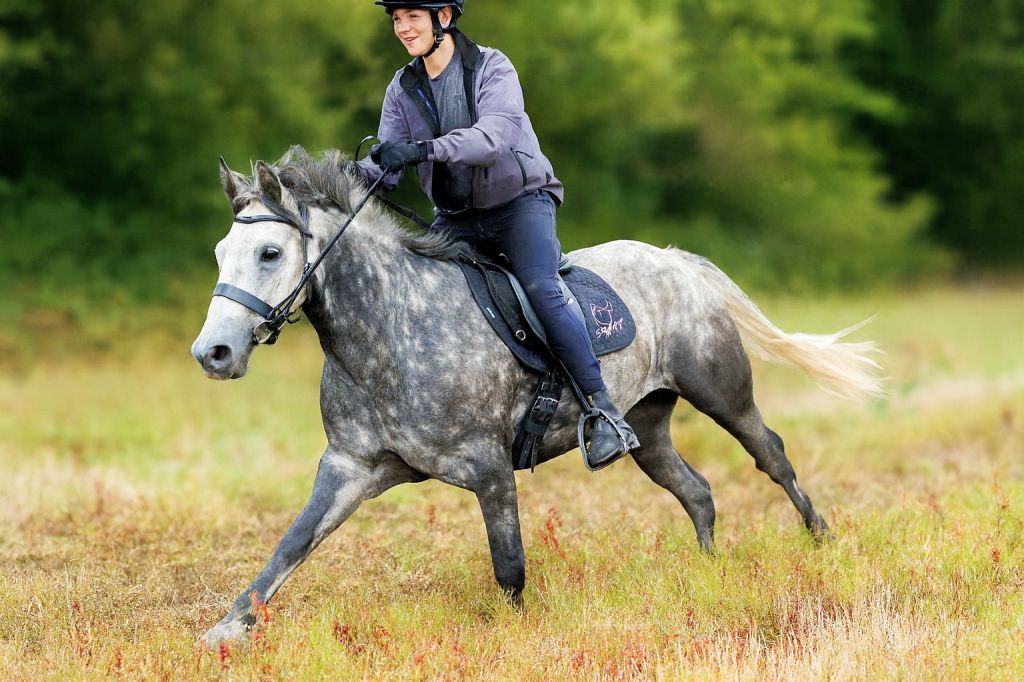
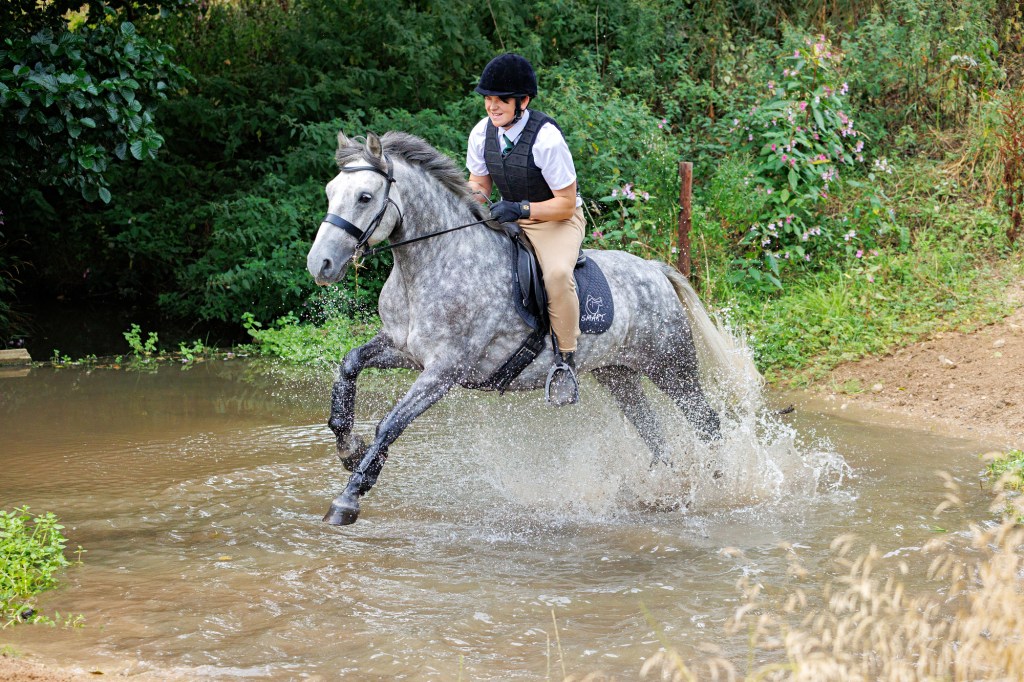
    More head low trot

  • Feeding Horses for Gut Health and Improved Performance

    Over the five years Mac has been with us I’ve studied and tried many different feeding methods and supplements. What a minefield this road has been. The feed and supplement industry has become such big business, and in today’s busy world we’re constantly being advertised to.

    I won’t go into what didn’t work for us over the past four years – that would take too long and be quite dull – but I do want to share the latest learning I’ve received and how we’ve applied it to improve Mac’s health.

    We truly are what we eat. Humans, horses, ponies – in fact I’m sure our four-legged friends are even more sensitive to what they digest than we are.


    Why Diet Matters So Much

    To illustrate this, we once had a pony that we couldn’t quite get quite sound on our paddocks. He moved further north into a moorland area, became sound within two weeks, and has been happily participating in Pony Club activities and fun rides ever since.

    Our current Connemara x Cob (more on him later) is another example. He was so sensitive to the grass on our paddocks that he bloated like a balloon and even shows slight lameness on the left hind if we school him after he has been out on the grass.

    So it came as no surprise when I was introduced to the theory of hind gut dysbiosis. This occurs when the flora of the gut are disturbed by incorrect food. The PH levels drop, the bad bacteria overwhelm the good, and the gut can no longer process as it should. The result is toxins leaking into the rest of the body. If you’d like to learn more about this, I recommend reading the Equinatural page: “The MicroBiome.”

    What Works for Mac

    So what have I learned is the correct way to feed Mac?

    • Forage first – Access to good quality meadow hay at all times.
    • Grass management – Limited access to very rich grass. Normally, Mac comes onto the stable and hard standing during the daytime, and he has field access overnight. (This year rich grass has not been much of an issue.)
    • Carrier feed – Sainfoin Pellets, used as a base for a simple, good quality balancer with no fillers.
    • Targeted support – P5P (Vitamin B6) to support his liver after dysbiosis, and at certain times of the year further supplements such as MSM and zinc to help during coat changes.

    The key point here is that feeds and supplements must come from reputable suppliers with no added fillers. Organic is the gold standard. I urge anyone to do their homework before buying.


    The Importance of Expert Guidance

    I haven’t become knowledgeable about Mac’s feeding regime by working it out entirely on my own. With the overwhelming amount of information available online, it would be almost impossible to sift out the correct advice without guidance.

    Our equine therapist Alex has been a constant source of knowledge and support throughout the road to recovery. I would strongly recommend finding someone who can help you too.

    The gut is a huge and complex part of the body. Just as we now accept best practice is to work with a physio, podiatrist (or farrier), saddle fitter, bit fitter and dentist for different aspects of horse care, I believe a therapist with knowledge of the digestive system – what and why we should or should not feed – is an essential part of the horse management toolkit.

    It truly does take a village.

    August 2025 Mac living his best life out on a fun ride with my son Bill

  • Mac’s Journey – Blood Test Results, Ulcer Treatment, and First Steps on the KPU Protocol

    While I waited for Mac’s plan to arrive, I’d already been advised to remove beet pulp as his main bucket feed and replace it with sainfoin pellets – nutrient-rich and excellent for aiding digestion. I thought I could see improvements from this change alone.


    The Surprising Start – Treating Ulcers

    When the diet plan arrived from Alex and Dr Fritz, I was surprised to see that the first step was treating Mac for stomach ulcers. I’d always been careful to feed ad-lib hay and to prevent ulcers as best I could. But when I thought about it, it made sense – if Mac had been living with low-level pain from the muscle stiffness and fatigue he’d shown in his ridden career so far, ulcers could easily have developed as a secondary condition.

    At this point, all other supplements had been removed. I began the ulcer protocol as advised.

    If you are not familiar with KPU or why it was part of our approach, you can read my full explainer here: Understanding KPU in Horses – A Guide for Equestrians.


    A Setback in Schooling

    We went for a coaching session with Lindsay and I was disheartened to see Mac back to the “banana shape” we’d seen a year ago. I quickly phoned Alex, who reassured me this was part of the process.

    We had removed the “sticking plaster” of his usual supplements – the ones that helped with symptoms but did nothing to treat the cause. For now, the priority was to stop asking too much of him and wait for improvements as the therapy moved through its cycle.


    Less Work, More Healing

    Alex also gave me some wonderful news – Mac no longer needed daily exercise. After over a year of riding or working him every single day, this felt like a huge relief. As a part-time pony owner, full-time mum, and working in our family business, getting him out daily had been a significant commitment. I was thrilled to be released from that pressure.


    Moving Through the Protocol

    Once the ulcer treatment was complete, we moved on to detoxification. After that, the focus shifted to restoring his hindgut with specific herbs designed to stabilise the colon and improve gut flora.

    The entire process was mapped out over 18 weeks, with the goal of completing by March 2025, Alex made me very aware that this was just the start of the process and full recovery could take up to a year. In the meantime, we kept things simple – hacking out, following the plan, and monitoring Mac’s progress.


    Early Changes

    The changes became apparent fairly early on. At first, Mac became brighter on the ground – there was a sparkle in his eye, and his head and neck started to lift higher on his shoulders. As we moved through the program, I noticed he began to swing his neck more freely, even turning to look at me when I was behind him in the stable – I realised this was something I’d not seen him do for along time.

    We avoided schooling work, continuing with hacking instead. His flexibility improved and he seemed much happier in himself. Our wider support team – the physio and trimmer (he is barefoot, but that is a story for another post) – all commented that he felt softer, more supple, and easier to work with.

    I was thrilled. It was working. He was happier, healing, and that was all that mattered to me.


    A Note on Support in the UK

    It must be said – and the cynic in me cannot ignore – that pharmaceutical companies make no money from you exercising your horse daily, adding an extra rug, feeding good-quality natural vitamin E, or using herbal supplements, there are no drugs developed by the pharmaceutical companies that “fix” this issue.

    This is why it is absolutely essential to find a well-qualified and knowledgeable Equine practitioner to guide you on this journey.

    If you want to learn more about KPU, you can find my full guide here: Understanding KPU in Horses – A Guide for Equestrians.


  • Our Barefoot Journey

    Early Days – Strong Feet and First Shoes

    When Mac came to us in 2020, he was two years old with lovely, strong, well-shaped small feet and great conformation. Having recently returned to horse ownership after a long break, I set about re-educating myself on modern horse care methods and management. One area that kept coming up was barefoot horses – with growing numbers of people moving away from traditional metal shoes and a large amount of research suggesting that going barefoot was better for the horse.

    Despite this knowledge gradually seeping in, when Mac was about four and a half, he had his first set of metal shoes. I was advised: “It’s stoney around here, you don’t have a school to ride in – he’ll never cope barefoot.” He had about three sets of shoes that first year before being turned away to rest over the winter.

    Shoeing and Ridden Issues

    In spring 2023, we shod him again. This was the year he turned five – and the year when his ridden issues really started to show. As time went on, I learned more and more about barefoot principles and methods. Mac had begun standing camped under, and it was suggested to me that he might have NPA (Negative Palmar Angle).

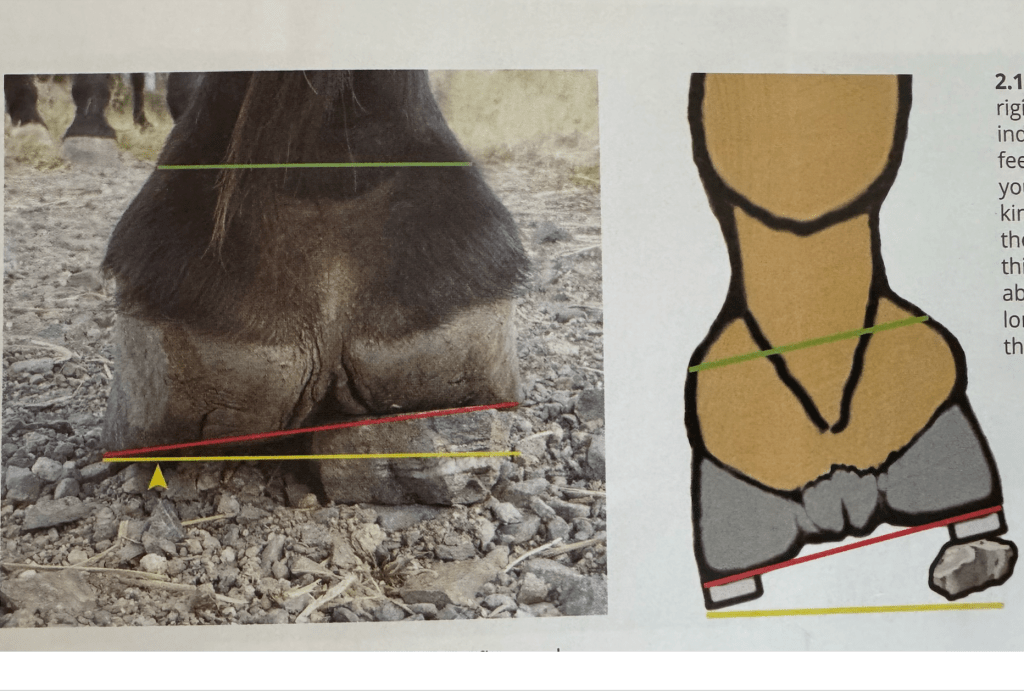
    This is when the coffin bone angles down at the back of the hoof instead of slightly up – uncomfortable for the horse and potentially damaging in the long term, adding too much pressure to the back of the foot and potentially causing issues further up the leg if allowed to continue.

    A great illustration of one of the many advantages of being barefoot over shod
    image credit “The Essential Hoof Book”

    Removing the Shoes

    January 2024, I made the decision to remove his shoes. Hoof boots helped tremendously – though my timing was questionable. On the plus side, winter ground is softer, helping horses transition to barefoot. On the downside, we’d bought boots slightly too large (the foot can change shape when not constrained by a rigid inflexible object) so Mac could “grow into them” – not ideal when you’re trying to canter on a muddy bridlepath!

    Transitioning Barefoot

    Mac was a difficult fit for boots, with his small, upright feet. After some trial and error, we found that Explora Magics were the best option – very adjustable and able to accommodate slightly higher heels than Scoot Boots (the brand many people start with). With the help of Equine Podiatrist Georgina Ridal, and a smaller set of boots, we were finally on the right track.

    Going barefoot takes time and commitment. In the early stages it feels like an extra faff – pulling boots on and off, especially in winter when they’re full of mud. But this stage doesn’t last forever. Over time, as the foot strengthens, the boots are needed less and less.

    Working with Georgina, I became more confident that barefoot could work for us.

    Learning About the Digital Cushion

    One of the key issues was that Mac had very little digital cushion (the area between the bone at the back of the foot and the frog). You can check this by putting your thumb in the dent above the bulbs of the heel and your finger halfway down the frog – ideally this should measure 6–7 cm deep. Mac’s was only 3–4 cm.

    When Mac was shod, his frog quickly lost contact with the ground, which is essential for circulation, shock absorption, and grip. Removing metal shoes addressed this immediately, allowing the frog to engage again.

    Diet and Hoof Health

    Diet plays a crucial role in hoof health. Horses that consume too much sugar – for example from rich grass – can quickly become “footy” on harder ground. Being barefoot adds another tool for monitoring the horse’s overall health: imbalances further up the body often show themselves in asymmetrical hoof balance.

    Over time, Mac’s feet became stronger with more ground contact. We used boots only for long, stoney rides, gradually riding more and more barefoot.

    One Year On – Rock Cruncher!

    Fast forward a year, and Mac’s feet are now true rock crunchers. He no longer wears boots, even on long fun rides of two and a half hours over stoney tracks. He stands correctly, his hoof structure continues to strengthen, he has regained his lovely floaty trot movement, and he is clearly more comfortable.

    I’m now a complete barefoot convert – and removed the shoes from our other pony over a year ago too.

    Further Information & Resources

    If you’d like to learn more about barefoot principles and hoof health, these resources are a great place to start:

    • The Essential Hoof Book – a clear, practical guide for horse owners.
    • Mark Johnson Farrier – Another Way – Facebook page and podcast sharing insights into modern hoof care.
    • Lindsay Fields Study of the Equine Hoof Facebook page.

    A Note of Caution

    While most horses are able to transition successfully to barefoot, some may not. It’s important to work with a qualified Equine Podiatrist. In the early stages they may need to visit every 3–4 weeks. They will assess the horse in movement and pay close attention to foot balance – often making very small, precise adjustments. Equine podiatrists are trained in the latest science of hoof and foot morphology and can also advise on a hoof-healthy diet, and their guidance can make all the difference to a successful barefoot journey.

  • Mac’s Next Chapter – From PSSM to a Whole New Approach


    Progress

    The summer of 2024 passed by quietly. Mac was steadily improving in his lessons with Lindsay – feeling stronger, more supple, and even able to canter comfortably during sessions. Away from the school, he seemed to enjoy hacking more than ever. He was alert, taking in the world around him, and even spooking occasionally at familiar objects like dustbins.

    This was new. It felt like he was waking up – seeing the world for the first time. I began to believe we were finally on the road to recovery and that Mac would become the pony we had always hoped for. I had no idea what was about to happen next.

    Mac meets Ziggy

    Meeting Alex – And a New Way of Thinking

    Lindsay introduced me to Alex, and with that introduction came an entirely new area of learning. Alex explained a condition called KPU (Kryptopyrroluria), and the conversation that followed opened my eyes to possibilities I had never considered.

    Our first discussion was long and scientific. Alex spoke about toxins, the liver, and the gut – explaining how a horse can become overloaded with toxins when the body cannot process and expel them correctly. Over time, this leads to a decline in health as the gut function deteriorates.

    Most importantly, Alex suggested that many of the symptoms we associate with PSSM2/MIM may not be directly caused by the genetic condition itself, but instead by toxin overload. By following the KPU protocol, she said, there was a strong chance we could address the root cause – and potentially resolve the PSSM2 symptoms completely.


    From Managing Symptoms to Finding the Cause

    The idea was both exciting and logical. For months, we had been treating the known symptoms of PSSM2, but Alex’s explanation made me realise we might have been addressing the wrong thing. I had information from Lindsay that other horses on the protocol displayed significant signs of improvement.

    The plan was simple but thorough:

    • Arrange a comprehensive set of blood tests through the vet.
    • Send the results to Alex and her mentor, Dr Fritz.
    • Receive a personalised programme of medicinal herbs based on the test results.
    • Stop all current PSSM2 supplements – which were, in her words, “a sticking plaster” – and focus on eliminating the real cause.

    I was completely on board. The tests were ordered, and we waited for our tailored plan of action to arrive.


    Waiting for Answers

    Those next few weeks seemed to stretch on forever. I was filled with anticipation and more than a little impatience – after all, this felt like the key to unlocking Mac’s full recovery. I couldn’t wait to see what the bloodwork revealed and to start a programme that might change everything.


  • Improving Your Horse’s Wellbeing: A Journey of Progress

    We’ve been ticking along through the winter. Lindsay continues to fill my head (and heart) with knowledge about riding in true harmony with Mac. Every new lesson begins on the ground, giving Mac the chance to learn without the added complication of a rider on his back. We focus on building his strength gradually, making sure he’s physically capable of what we’re asking.

    We forage – it’s great to see what they pick to eat

    Alongside Mac’s progress, we work on me, the bent shoulders, the crookedness through my body, and a whole set of Pilates exercises that really do make a difference. Slowly but surely, some of the old riding habits that don’t serve the horse begin to fall away. (It’s definitely still a work in progress.) Mac seems to approve. He’s brighter, more willing, and just… happier.

    We’re still following the supplement regime for PSSM2, and the signs are good. In our lessons, he now powers straight down the long sides. We no longer have to stop halfway through for a snooze (yes, really, that was a regular thing in the early months). We’ve reintroduced canter, first from the ground, and now from the saddle. It’s stronger, more confident. He’s no longer ‘Eeyore’ around the yard, he moves with purpose. We hack for longer. He flies around the Somerford Farm Ride like he owns it.

    Rachel Chadfield, Mac’s physio, continues to visit regularly. She assesses Mac’s musculoskeletal health, treats areas of tension with Indiba therapy, and tracks how his body is adapting to the work we’re doing. At her most recent visit, she could feel real improvement, but noted he’s still carrying a lot of tightness through his shoulders. One issue I can’t seem to get on top of is his persistent cough.

    We attend a training session across the 80 acres at Somerford. It’s like riding another pony. Mac coughs through the entire session and feels like he’s wading through treacle, heavy, stuck, lacking spark, we have to put him behind another lead horse to encourage him forward. The trainer isn’t impressed and strongly recommends we get him scoped.

    So, we do. The scope doesn’t show anything obvious, but when the tube goes down, Mac coughs, hard, and the vet is surprised. She prescribes steroids. I’m sceptical, as always of the route that leads to big pharma. But of course, I follow my instructions…

  • Transforming Horse and Rider: A Journey with PSSM2

    Enter Lindsay stage left – Because every pony deserves a fairy godmother………..

    The first lesson, we walked. And walked. In fact, we halted for most of it. I remember thinking, This is a bit weird… I mean, I know we’re not exactly Grand Prix ready, but a whole lesson at the walk?

    But here’s the thing – I was completely fascinated. What Lindsay was teaching me made sense in a way nothing else had. Let’s be honest, the traditional “he should be able to do this by now” approach hadn’t exactly been a roaring success, had it?

    Working from the ground with Lindsay. With focus on Mac’s very stiff shoulders.

    Finding Our Feet

    One of the many bits of luck in this journey is that Lindsay’s yard is only about 15 minutes from me. So I was able to travel there for lessons, much easier logistically, and a lot more inspiring.

    The first time I arrived, though, I’ll admit I felt a bit overwhelmed. I walked through the smart stable yard, big dressage horses peering over the doors at me and Mac. There we were: my little Connemara and me, a 50-something rider who’s a bit of a jack of all trades, and definitely not a master of any.

    But Lindsay quickly put me at ease. She said she was happy to teach most horses and riders, as long as they were open to learning. That mattered. That meant something.

    Hooked on the Walk

    We booked a second lesson later that month. Again, we walked. Again, I was hooked.

    Lindsay has this quietly brilliant way of communicating. She brings with her an encyclopaedic knowledge of horse bodies, human bodies, and how they move in harmony. Add to that her calm confidence and an instinctive understanding of what both horse and rider need, and you’ve got a pretty powerful combination. It’s all delivered with empathy, kindness, and a good dose of humour.

    By the end of that second session, I knew two things:

    1. I had a lot to learn.
    2. I’d found the teacher I’d been looking for.

    A Diagnosis

    At the start of our third lesson, Lindsay gently suggested something I hadn’t considered, she thought Mac might have PSSM2. It’s a condition more commonly seen in warmbloods, and she recognised the signs right away; two of the horses she rides have a confirmed diagnosis.

    At one point, Lindsay rode Mac herself. I was both relieved and horrified to see that even with her in the saddle, he still moved down the long side like a banana, curved and bent when he should’ve been straight. On one hand, I was secretly pleased, it wasn’t just my riding. On the other, I was worried: If he’s still like that with her, surely there’s something seriously wrong…

    By the time the results arrived, we were already managing him as if he had PSSM2. Daily low level exercise, we added high-quality magnesium, amino acids and liquid vitamin E to his diet. Sure enough, the test confirmed he was n/P2.

    I was devastated.

    But Lindsay was calm and reassuring.
    “Don’t worry,” she said. “He can still have a normal life. You just need to manage the symptoms—and accept that it will take him longer then other horses to reach each milestone.”

    A New Routine

    The results came in December 2023. By then, I had already:

    • Started moving him daily—sometimes just 30 minutes in-hand
    • Adjusted his diet with PSSM-specific supplements
    • Watched the weather forecast like a hawk and rugged him accordingly

    We continued to visit Lindsay a couple of times a month, focusing on groundwork to build strength. In between visits, we kept hacking the hills.

    And gradually, over the winter, we began to see improvement.

    Changing Me Too

    But the transformation didn’t stop with Mac.

    Lindsay also found me a place in her Equipilates class. I’d done a year of online rider Pilates and dipped in and out of yoga over the years, but this was something different. Weekly, live, in-person classes with the same person retraining my riding? I was thrilled.

    And I had no idea how much it would change me.

    Eighteen months in, I’m straighter, more flexible, and stronger than I’ve ever been. It’s always been said I walk like a farmer (fair!), and my shoulders were notoriously rounded. We’ve worked on those shoulders a lot. A lifelong friend, who’s also a physio and has known me since I was 11, recently noted my posture is better than she’s ever seen it.

    I’ll admit it: I’m a little obsessed.
    I have all the equipment at home and aim to complete two additional online classes from the Equipilates library each week. I even have a pre-ride routine to get myself ready to be the rider Mac deserves.

    As Lindsay would say: “Be the rider your horse would choose.”

    And outside the yard? I’m pain-free, strong, supple, and found myself dancing around the kitchen last weekend feeling more like a ballerina than a farmer.

  • Signs of Struggle: Understanding Horse Fitness and Wellbeing

    Year 5 – Down to the bottom and back again – The Restart: Signs We Couldn’t Ignore

    Mac had the winter of 2022/2023 off, time to rest, grow, and hopefully come back stronger. We brought him slowly back into work in the spring of 2023, starting with plenty of roadwork and gentle hacking.

    In hindsight, he was noticeably worse, steadier, stiffer, and less forward than before. But I pushed on, thinking maybe he just needed to rebuild fitness.

    About 8 to 12 weeks after we restarted, Mac went for his first proper lesson.

    At first, he managed to canter, just about, on the right rein. He got around the arena and even pulled off a 20-metre circle, though it was hard work. On the left rein, though, the canter was barely there. Disjointed, weak, unbalanced, like he simply couldn’t get his body to do it.


    For the next few months, we returned to hacking and strength work. I was under no illusion, at five, Mac simply wasn’t ready to work consistently in the arena. So, we focused on what he could manage, and what we both enjoyed.

    We hacked out with friends, took our time, and began to rebuild confidence. Mac even competed in a TREC competition with a friend and her horse. He was brilliant with the obstacles, especially the gate, the bridge, and the rein back. Calm, clever, and focused.

    But there were still signs of discomfort. During Day 2, particularly while completing the PTV (Parcours en Terrain Varié) phase, an obstacle course designed to test control, obedience, and partnership over varied terrain, we noticed a lot of tail swishing, we were now riding in his third tree’d saddle. Something still wasn’t right.

    That weekend, I was introduced to SMART Saddles, they are treeless but look like a traditional tree’d saddle, and I brought home an ex-demo to try. It was a game changer. Mac moved better almost immediately, straighter, freer, and noticeably more comfortable. For the first time, I felt like the saddle was helping, not hindering him.

    On the first day of TREC, he did run out of energy toward the end of the 12km ride. We finished the last section mostly at walk, and our scores reflected the slower pace. Still, we came away with a very respectable second place, and a quiet sense that we were finally starting to piece the puzzle together.


    Just as I was beginning to accept that Mac might never be the pony I’d hoped for, everything changed. I met Lindsay, the founder of Equipilates® and LWR Dressage & Equitation Science Training, a brilliant dressage trainer and coach who uses Pilates-based techniques to help riders become more balanced, aware, and effective in the saddle.

    It was the beginning of something completely different, not just for Mac, but for me too. Lindsay didn’t see a difficult pony. She saw a body that was struggling, and a rider who wanted to help. Her approach, insight, and empathy opened a door that changed everything for us……………………….

    mac in his trec gear
  • Starting Mac


    What We Wish We Knew: Starting Mac the Right Way

    When we first started working with Mac, we didn’t yet know about Equitation Science.

    A Gentle Pony, a Big Ask

    Mac is a calm and gentle pony. From early on, he tried to tell us things—through his body language, his posture, and sometimes through resistance, but we didn’t always understand what he was saying. We now realise that before backing him, he needed more structured groundwork, not just to teach obedience, but to help him build the physical strength and confidence required to carry a rider.

    At the time, we didn’t know how important it was to:

    • Strengthen his postural frame before adding weight
    • Break down each stage of learning into clear, single steps
    • Give him the chance to process, communicate, and grow confidence

    Shutting Down, Not Acting Out

    Mac didn’t explode or act out. He did something quieter, and harder to spot: he shut down. He became introverted, less expressive, and harder to read. It wasn’t dramatic, but it was a red flag we didn’t yet know how to interpret. In hindsight, we can see that his behaviour reflected both emotional stress and physical discomfort, which we later discovered was connected to his muscle health.

    At the time, we didn’t know the science. We didn’t realise that a horse shutting down can be a survival strategy, not a sign of compliance, but a loss of confidence or hope.

    Enter Equitation Science

    Learning about Equitation Science has changed everything for us. With our trainer’s help, we’ve started to rebuild Mac’s trust in training – step by step, moment by moment. ESI has given us the tools to:

    • Understand why he reacts the way he does
    • Use clear, consistent signals so he’s never confused
    • Allow him to communicate, without punishing him for expressing fear or uncertainty
    • Support him physically, not just emotionally, by working in postures that strengthen rather than stress his body

    It’s not about blame. It’s about progress. We know more now, and we’re doing better, for Mac and for ourselves.

    Why This Matters for the Horse World

    Horses like Mac don’t just need obedience. They need education, clarity, and trust. They need trainers who understand how horses learn, and who are willing to listen just as much as they lead.

    We believe it’s time for:

    • Horse owners to feel empowered to ask questions and learn
    • Welfare and performance to be treated as the same goal, not separate ones

    We can’t go back, but we can move forward, smarter, softer, and stronger.