Category: Horse Health & Rehabilitation

  • Feeding Horses for Gut Health and Improved Performance

    Over the five years Mac has been with us I’ve studied and tried many different feeding methods and supplements. What a minefield this road has been. The feed and supplement industry has become such big business, and in today’s busy world we’re constantly being advertised to.

    I won’t go into what didn’t work for us over the past four years – that would take too long and be quite dull – but I do want to share the latest learning I’ve received and how we’ve applied it to improve Mac’s health.

    We truly are what we eat. Humans, horses, ponies – in fact I’m sure our four-legged friends are even more sensitive to what they digest than we are.
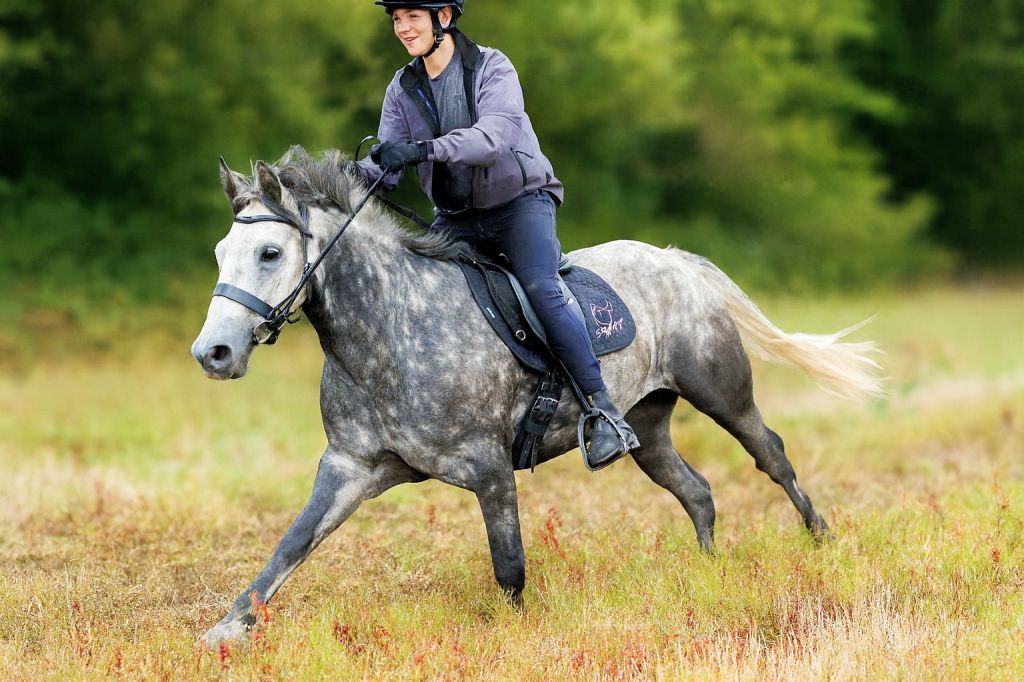

    Why Diet Matters So Much

    To illustrate this, we once had a pony that we couldn’t quite get quite sound on our paddocks. He moved further north into a moorland area, became sound within two weeks, and has been happily participating in Pony Club activities and fun rides ever since.

    Our current Connemara x Cob (more on him later) is another example. He was so sensitive to the grass on our paddocks that he bloated like a balloon and even shows slight lameness on the left hind if we school him after he has been out on the grass.

    So it came as no surprise when I was introduced to the theory of hind gut dysbiosis. This occurs when the flora of the gut are disturbed by incorrect food. The PH levels drop, the bad bacteria overwhelm the good, and the gut can no longer process as it should. The result is toxins leaking into the rest of the body. If you’d like to learn more about this, I recommend reading the Equinatural page: “The MicroBiome.”

    What Works for Mac

    So what have I learned is the correct way to feed Mac?

    • Forage first – Access to good quality meadow hay at all times.
    • Grass management – Limited access to very rich grass. Normally, Mac comes onto the stable and hard standing during the daytime, and he has field access overnight. (This year rich grass has not been much of an issue.)
    • Carrier feed – Sainfoin Pellets, used as a base for a simple, good quality balancer with no fillers.
    • Targeted support – P5P (Vitamin B6) to support his liver after dysbiosis, and at certain times of the year further supplements such as MSM and zinc to help during coat changes.

    The key point here is that feeds and supplements must come from reputable suppliers with no added fillers. Organic is the gold standard. I urge anyone to do their homework before buying.


    The Importance of Expert Guidance

    I haven’t become knowledgeable about Mac’s feeding regime by working it out entirely on my own. With the overwhelming amount of information available online, it would be almost impossible to sift out the correct advice without guidance.

    Our equine therapist Alex has been a constant source of knowledge and support throughout the road to recovery. I would strongly recommend finding someone who can help you too.

    The gut is a huge and complex part of the body. Just as we now accept best practice is to work with a physio, podiatrist (or farrier), saddle fitter, bit fitter and dentist for different aspects of horse care, I believe a therapist with knowledge of the digestive system – what and why we should or should not feed – is an essential part of the horse management toolkit.

    It truly does take a village.
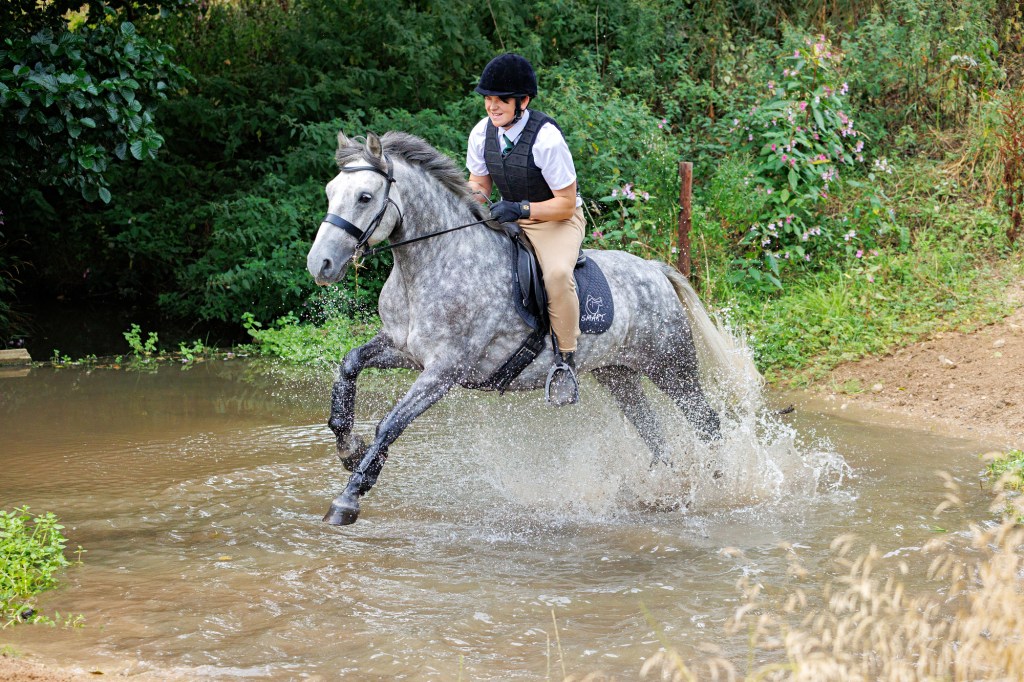
    August 2025 Mac living his best life out on a fun ride with my son Bill

  • Mac’s Journey – Blood Test Results, Ulcer Treatment, and First Steps on the KPU Protocol

    While I waited for Mac’s plan to arrive, I’d already been advised to remove beet pulp as his main bucket feed and replace it with sainfoin pellets – nutrient-rich and excellent for aiding digestion. I thought I could see improvements from this change alone.


    The Surprising Start – Treating Ulcers

    When the diet plan arrived from Alex and Dr Fritz, I was surprised to see that the first step was treating Mac for stomach ulcers. I’d always been careful to feed ad-lib hay and to prevent ulcers as best I could. But when I thought about it, it made sense – if Mac had been living with low-level pain from the muscle stiffness and fatigue he’d shown in his ridden career so far, ulcers could easily have developed as a secondary condition.

    At this point, all other supplements had been removed. I began the ulcer protocol as advised.

    If you are not familiar with KPU or why it was part of our approach, you can read my full explainer here: Understanding KPU in Horses – A Guide for Equestrians.


    A Setback in Schooling

    We went for a coaching session with Lindsay and I was disheartened to see Mac back to the “banana shape” we’d seen a year ago. I quickly phoned Alex, who reassured me this was part of the process.

    We had removed the “sticking plaster” of his usual supplements – the ones that helped with symptoms but did nothing to treat the cause. For now, the priority was to stop asking too much of him and wait for improvements as the therapy moved through its cycle.


    Less Work, More Healing

    Alex also gave me some wonderful news – Mac no longer needed daily exercise. After over a year of riding or working him every single day, this felt like a huge relief. As a part-time pony owner, full-time mum, and working in our family business, getting him out daily had been a significant commitment. I was thrilled to be released from that pressure.


    Moving Through the Protocol

    Once the ulcer treatment was complete, we moved on to detoxification. After that, the focus shifted to restoring his hindgut with specific herbs designed to stabilise the colon and improve gut flora.

    The entire process was mapped out over 18 weeks, with the goal of completing by March 2025, Alex made me very aware that this was just the start of the process and full recovery could take up to a year. In the meantime, we kept things simple – hacking out, following the plan, and monitoring Mac’s progress.


    Early Changes

    The changes became apparent fairly early on. At first, Mac became brighter on the ground – there was a sparkle in his eye, and his head and neck started to lift higher on his shoulders. As we moved through the program, I noticed he began to swing his neck more freely, even turning to look at me when I was behind him in the stable – I realised this was something I’d not seen him do for along time.

    We avoided schooling work, continuing with hacking instead. His flexibility improved and he seemed much happier in himself. Our wider support team – the physio and trimmer (he is barefoot, but that is a story for another post) – all commented that he felt softer, more supple, and easier to work with.

    I was thrilled. It was working. He was happier, healing, and that was all that mattered to me.


    A Note on Support in the UK

    It must be said – and the cynic in me cannot ignore – that pharmaceutical companies make no money from you exercising your horse daily, adding an extra rug, feeding good-quality natural vitamin E, or using herbal supplements, there are no drugs developed by the pharmaceutical companies that “fix” this issue.

    This is why it is absolutely essential to find a well-qualified and knowledgeable Equine practitioner to guide you on this journey.

    If you want to learn more about KPU, you can find my full guide here: Understanding KPU in Horses – A Guide for Equestrians.


  • Our Barefoot Journey

    Early Days – Strong Feet and First Shoes

    When Mac came to us in 2020, he was two years old with lovely, strong, well-shaped small feet and great conformation. Having recently returned to horse ownership after a long break, I set about re-educating myself on modern horse care methods and management. One area that kept coming up was barefoot horses – with growing numbers of people moving away from traditional metal shoes and a large amount of research suggesting that going barefoot was better for the horse.

    Despite this knowledge gradually seeping in, when Mac was about four and a half, he had his first set of metal shoes. I was advised: “It’s stoney around here, you don’t have a school to ride in – he’ll never cope barefoot.” He had about three sets of shoes that first year before being turned away to rest over the winter.

    Shoeing and Ridden Issues

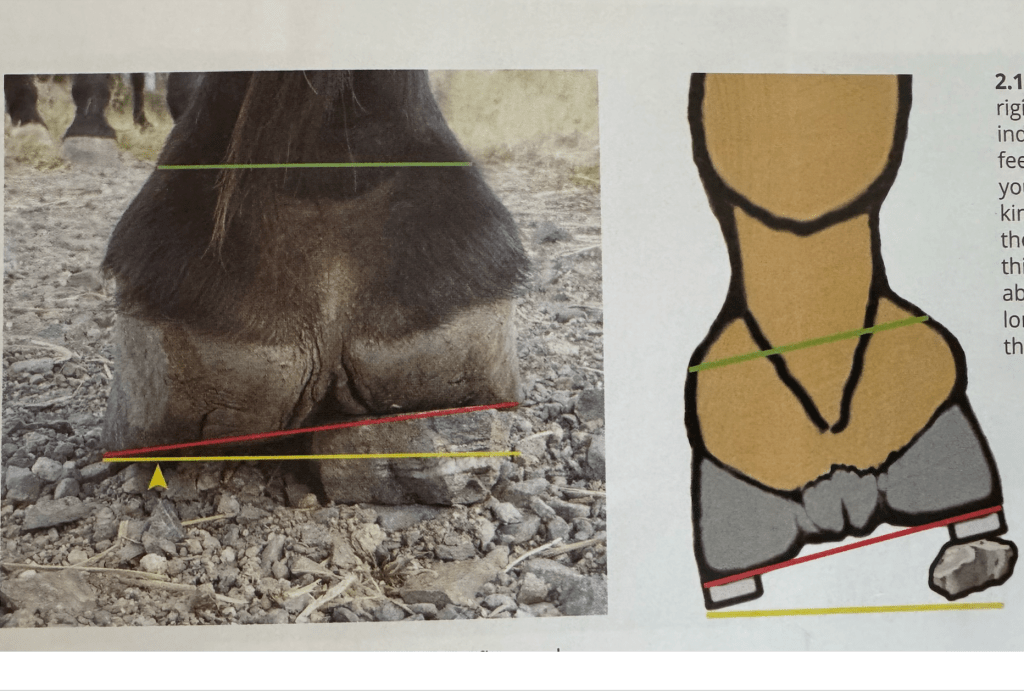
    In spring 2023, we shod him again. This was the year he turned five – and the year when his ridden issues really started to show. As time went on, I learned more and more about barefoot principles and methods. Mac had begun standing camped under, and it was suggested to me that he might have NPA (Negative Palmar Angle).

    This is when the coffin bone angles down at the back of the hoof instead of slightly up – uncomfortable for the horse and potentially damaging in the long term, adding too much pressure to the back of the foot and potentially causing issues further up the leg if allowed to continue.

    A great illustration of one of the many advantages of being barefoot over shod
    image credit “The Essential Hoof Book”

    Removing the Shoes

    January 2024, I made the decision to remove his shoes. Hoof boots helped tremendously – though my timing was questionable. On the plus side, winter ground is softer, helping horses transition to barefoot. On the downside, we’d bought boots slightly too large (the foot can change shape when not constrained by a rigid inflexible object) so Mac could “grow into them” – not ideal when you’re trying to canter on a muddy bridlepath!

    Transitioning Barefoot

    Mac was a difficult fit for boots, with his small, upright feet. After some trial and error, we found that Explora Magics were the best option – very adjustable and able to accommodate slightly higher heels than Scoot Boots (the brand many people start with). With the help of Equine Podiatrist Georgina Ridal, and a smaller set of boots, we were finally on the right track.

    Going barefoot takes time and commitment. In the early stages it feels like an extra faff – pulling boots on and off, especially in winter when they’re full of mud. But this stage doesn’t last forever. Over time, as the foot strengthens, the boots are needed less and less.

    Working with Georgina, I became more confident that barefoot could work for us.

    Learning About the Digital Cushion

    One of the key issues was that Mac had very little digital cushion (the area between the bone at the back of the foot and the frog). You can check this by putting your thumb in the dent above the bulbs of the heel and your finger halfway down the frog – ideally this should measure 6–7 cm deep. Mac’s was only 3–4 cm.

    When Mac was shod, his frog quickly lost contact with the ground, which is essential for circulation, shock absorption, and grip. Removing metal shoes addressed this immediately, allowing the frog to engage again.

    Diet and Hoof Health

    Diet plays a crucial role in hoof health. Horses that consume too much sugar – for example from rich grass – can quickly become “footy” on harder ground. Being barefoot adds another tool for monitoring the horse’s overall health: imbalances further up the body often show themselves in asymmetrical hoof balance.

    Over time, Mac’s feet became stronger with more ground contact. We used boots only for long, stoney rides, gradually riding more and more barefoot.

    One Year On – Rock Cruncher!

    Fast forward a year, and Mac’s feet are now true rock crunchers. He no longer wears boots, even on long fun rides of two and a half hours over stoney tracks. He stands correctly, his hoof structure continues to strengthen, he has regained his lovely floaty trot movement, and he is clearly more comfortable.

    I’m now a complete barefoot convert – and removed the shoes from our other pony over a year ago too.

    Further Information & Resources

    If you’d like to learn more about barefoot principles and hoof health, these resources are a great place to start:

    • The Essential Hoof Book – a clear, practical guide for horse owners.
    • Mark Johnson Farrier – Another Way – Facebook page and podcast sharing insights into modern hoof care.
    • Lindsay Fields Study of the Equine Hoof Facebook page.

    A Note of Caution

    While most horses are able to transition successfully to barefoot, some may not. It’s important to work with a qualified Equine Podiatrist. In the early stages they may need to visit every 3–4 weeks. They will assess the horse in movement and pay close attention to foot balance – often making very small, precise adjustments. Equine podiatrists are trained in the latest science of hoof and foot morphology and can also advise on a hoof-healthy diet, and their guidance can make all the difference to a successful barefoot journey.