Category: Uncategorized

  • Mac’s KPU Journey – One Year On: Progress and Positive Changes (August 2025)

    Where Are We Now?

    It’s now a year since meeting Alex and beginning treatment for KPU, and both Mac’s wider team and I feel there have been very positive changes over the last 12 months.

    On the ground, he is bright and interested again, carrying his head higher and showing more flexibility through his shoulders. This translates into his ridden work, where he feels brighter, holds himself better through the front end, and is able to flex more easily through his shoulders and neck.

    He also seems less affected by the weather and is now in a more manageable work pattern. At weekends he enjoys two to three-hour fun rides, and during the week he hacks three times.
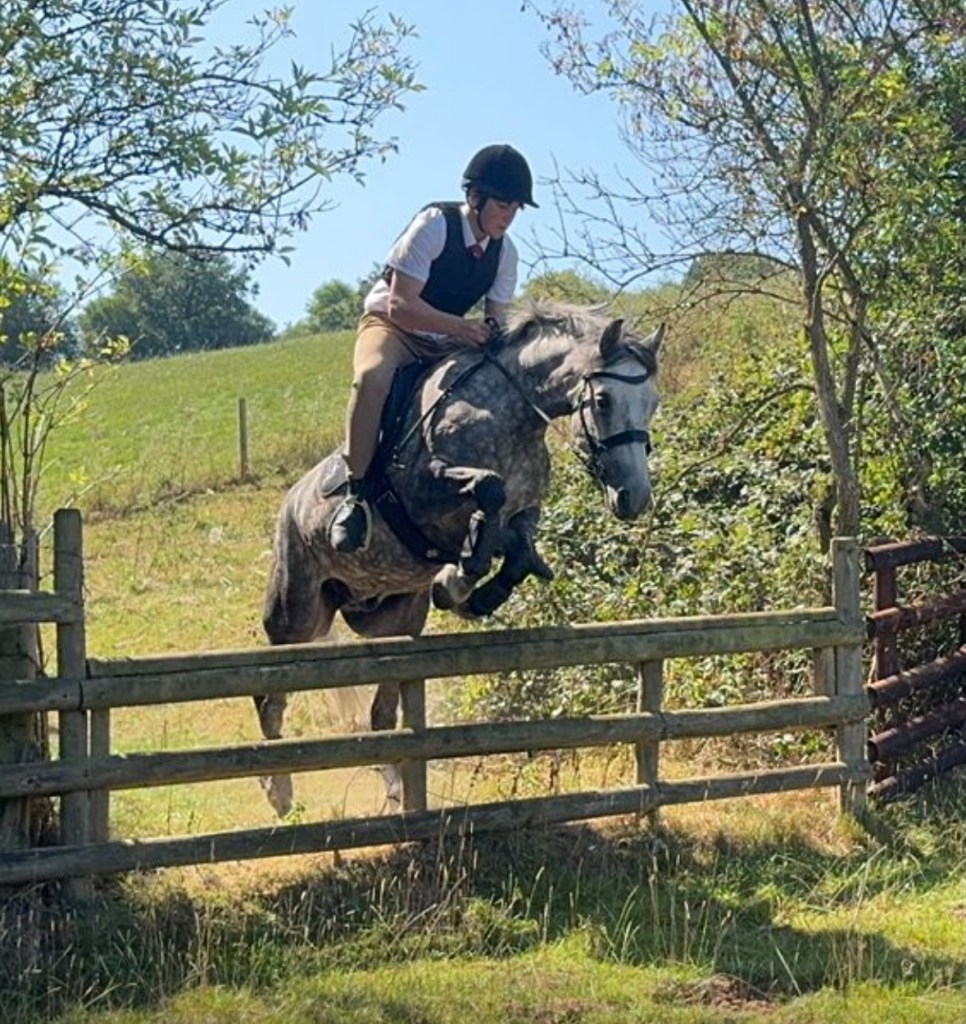
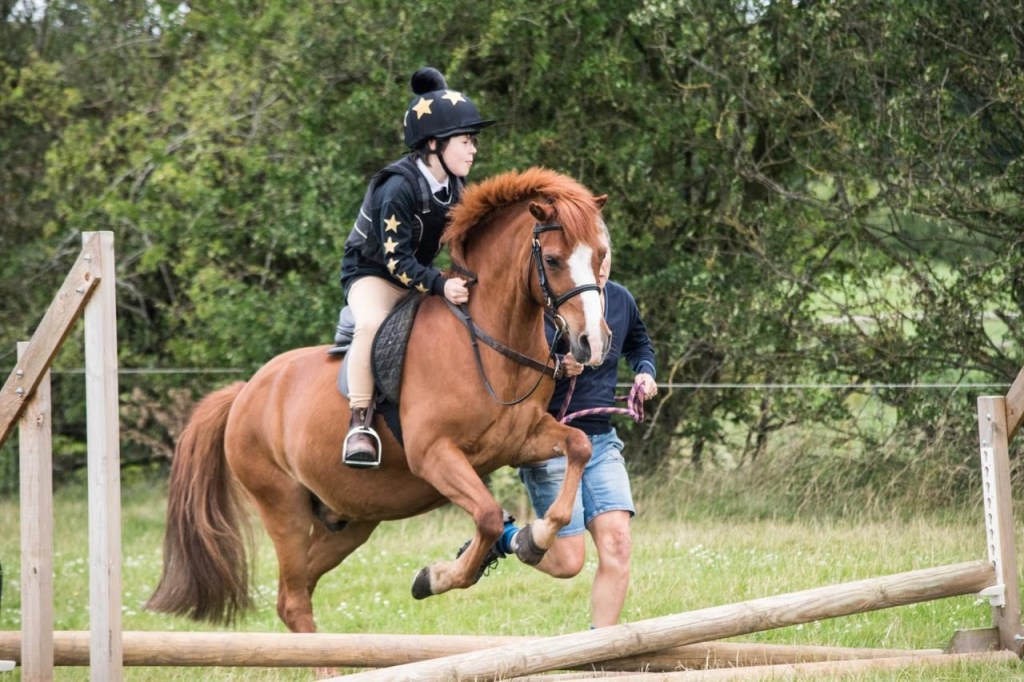
    Bill and Mac – fun ride August 2025

    On Friday we returned to Lindsay, who was keen to assess Mac again as I’d been keeping her updated on his progress over the summer.

    We began with groundwork: large circles in trot and canter to loosen him up, before moving into smaller circles in a very steady trot with his head low. The aim of these exercises is to encourage Mac to release through his spine and lumbar region. There were plenty of visible releases, including softening through his jaw and mouth.
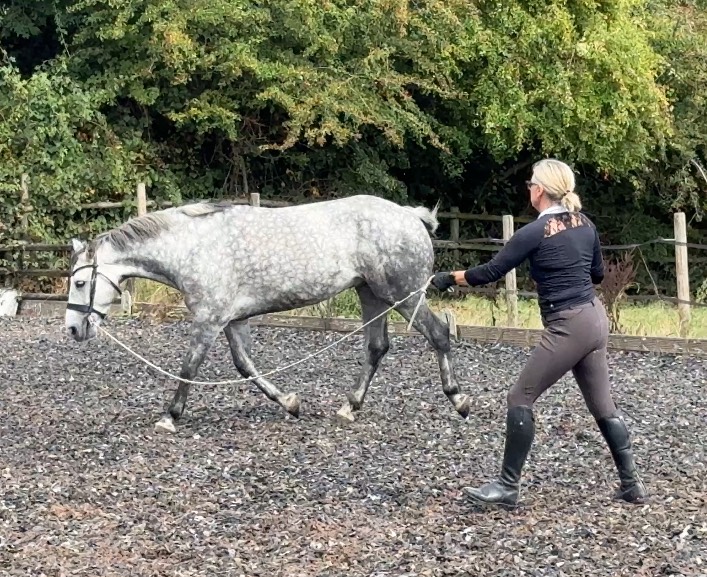
    Trotting in a large circle encouraging head low

    When a horse relaxes the jaw and tongue, it does much more than ease tension in the head. This area is connected to the rest of the body via the hyoid apparatus – a small set of bones that support the tongue and link, through muscles and fascia, to the skull, neck, sternum, shoulders, and indirectly to the hindquarters. Because of this connection, a release in the jaw can influence balance, posture, and movement through the whole body. Restrictions in this area may limit freedom in the shoulders and reduce overall coordination, while relaxation supports freer, more balanced movement from poll to hindquarters.
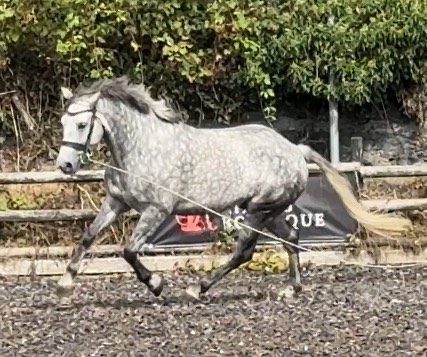
    Canter work from the ground

    With the groundwork going well, we tacked up and worked briefly under saddle. We started with some walking and trotting with head low, then moved on to quarter turns around the forehand using a block as a marker. This simple exercise has many benefits: it improves suppleness by encouraging Mac to release through his neck, shoulders, and hindquarters, while also building strength as he crosses and engages his hind legs. It helps balance and coordination by teaching him to shift his weight and pivot around his front legs, and it also increases responsiveness to leg aids. Importantly, turns on the forehand lay the foundation for more advanced lateral movements and collection, making them an excellent tool for developing flexibility and preparing for future schooling.

    We kept the ridden session short — just 10 to 15 minutes — and were both pleased with how he went. My homework for the week is to continue with the groundwork and add a small amount of ridden work. We’ll return to Lindsay next Friday to build on this progress.

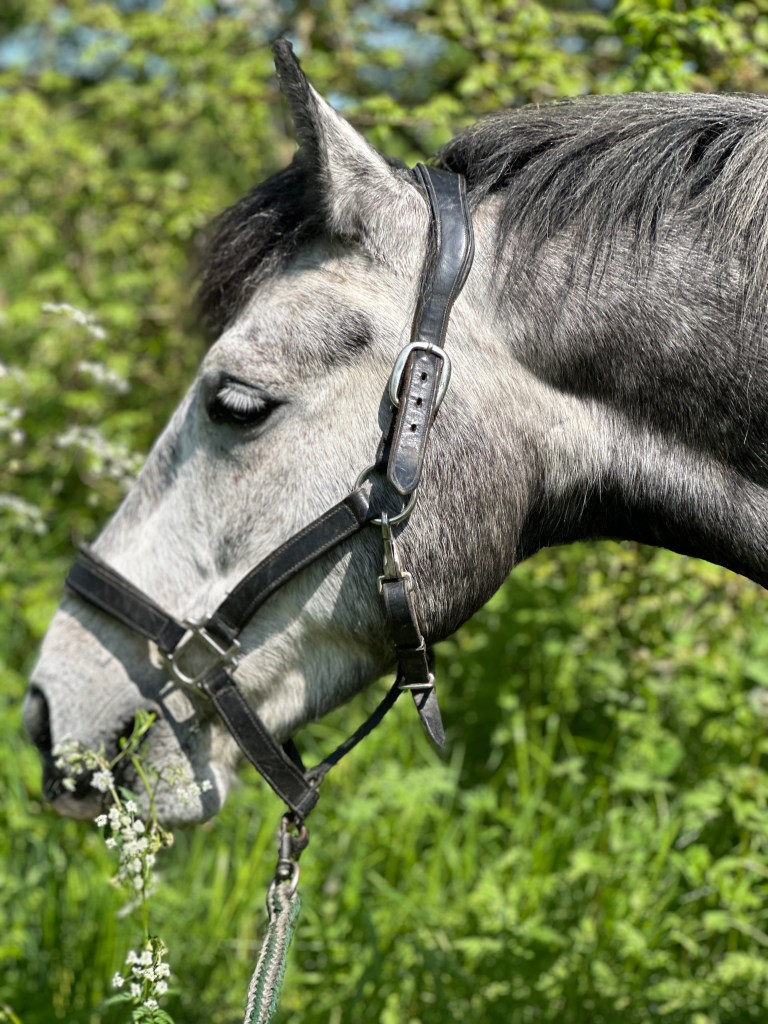
    More head low trot

  • Improving Your Horse’s Wellbeing: A Journey of Progress

    We’ve been ticking along through the winter. Lindsay continues to fill my head (and heart) with knowledge about riding in true harmony with Mac. Every new lesson begins on the ground, giving Mac the chance to learn without the added complication of a rider on his back. We focus on building his strength gradually, making sure he’s physically capable of what we’re asking.

    We forage – it’s great to see what they pick to eat

    Alongside Mac’s progress, we work on me, the bent shoulders, the crookedness through my body, and a whole set of Pilates exercises that really do make a difference. Slowly but surely, some of the old riding habits that don’t serve the horse begin to fall away. (It’s definitely still a work in progress.) Mac seems to approve. He’s brighter, more willing, and just… happier.

    We’re still following the supplement regime for PSSM2, and the signs are good. In our lessons, he now powers straight down the long sides. We no longer have to stop halfway through for a snooze (yes, really, that was a regular thing in the early months). We’ve reintroduced canter, first from the ground, and now from the saddle. It’s stronger, more confident. He’s no longer ‘Eeyore’ around the yard, he moves with purpose. We hack for longer. He flies around the Somerford Farm Ride like he owns it.

    Rachel Chadfield, Mac’s physio, continues to visit regularly. She assesses Mac’s musculoskeletal health, treats areas of tension with Indiba therapy, and tracks how his body is adapting to the work we’re doing. At her most recent visit, she could feel real improvement, but noted he’s still carrying a lot of tightness through his shoulders. One issue I can’t seem to get on top of is his persistent cough.

    We attend a training session across the 80 acres at Somerford. It’s like riding another pony. Mac coughs through the entire session and feels like he’s wading through treacle, heavy, stuck, lacking spark, we have to put him behind another lead horse to encourage him forward. The trainer isn’t impressed and strongly recommends we get him scoped.

    So, we do. The scope doesn’t show anything obvious, but when the tube goes down, Mac coughs, hard, and the vet is surprised. She prescribes steroids. I’m sceptical, as always of the route that leads to big pharma. But of course, I follow my instructions…

  • The Search Begins


    How a cancelled dream trip led us to the pony of a lifetime

    It was 2020, and Covid had hit us all. Like many, we found ourselves suddenly grounded, with plans changed and horizons narrowed. My mum had passed away, and she’d left me a small amount of money. We’d used part of it to book a trip of a lifetime to Costa Rica for my 50th birthday, something special for the whole family. Of course, that trip was cancelled, and the deposit was refunded.

    At the time, we were borrowing a pony called Dude. My son Bill adored him, but we knew that before long, he’d need his own pony. That’s when the idea was born: we could buy a youngster now and bring it on ourselves.

    I’d done it before, in my late teens, a lovely four-year-old Irish Sports Horse that turned out to be a real success. But this time would be different. This would be our first time purchasing a truly young pony, and we knew it needed to be the right one.


    Searching in Lockdown

    It was lockdown, and pony prices were sky high. I even considered heading to Ireland to buy from the Clifden auctions, just to find something suitable within budget. I contacted a reputable Irish stud and mentioned what we could afford. The answer was sharp:

    “You’d be lucky to get a yearling out of Ireland at that price.”

    Still determined, I remembered a lovely lady I’d spoken to earlier in the year, Emma at a Connemara stud in Oxfordshire. When we first spoke, I’d thought her youngsters were out of our reach, price-wise. But the more I searched, the more I realised: I wanted to buy from Emma.

    There was something about that first conversation, calm, knowledgeable, and entirely genuine. I trusted her. And as a newbie to buying a two-year-old, I needed someone like that to help guide the decision.


    The Visit That Changed Everything

    We arranged a visit, and I brought along an old friend, Pip, a lifelong horsewoman and far better placed than me to judge a youngster.

    We arrived at the stud and were lucky enough to meet the whole crew, the year’s new foals, their beautiful new stallion Glencarrig Tempest, and a field full of striking two- and three-year-olds.

    And then he appeared.

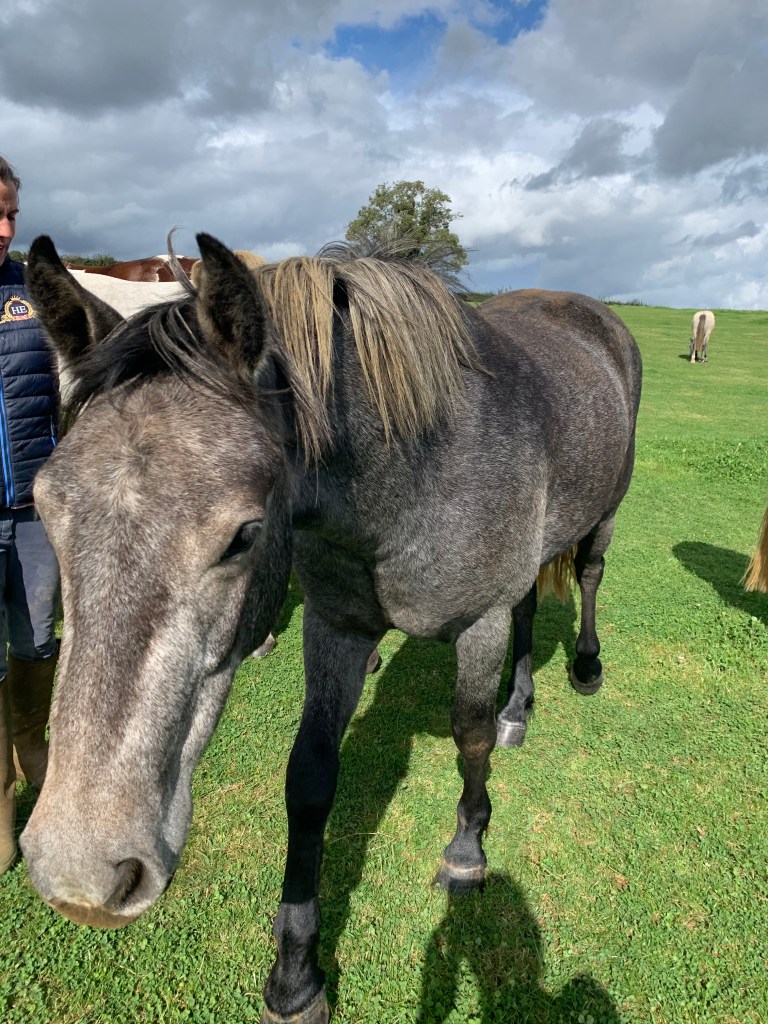
    Our first meeting at the stud

    There was something about this dark grey colt, bold but gentle, moving with lovely rhythm and expression. Inquisitive from the start, he followed us around the field that day, and earned his first nickname:

    “Labrador.”


    The Choice Was Clear

    We shortlisted him and a Connemara-cross filly to bring in for a closer look. While the mare towed Emma along on a tight lead rope, this quiet grey colt walked beside me like he already belonged.

    That was it. The decision made itself.

    We arranged a vetting, scraped together what we could, and had a bit of a family whip-round. To this day, we joke that both my dad and mother-in-law owned a leg each!

    And so, Mac came home.


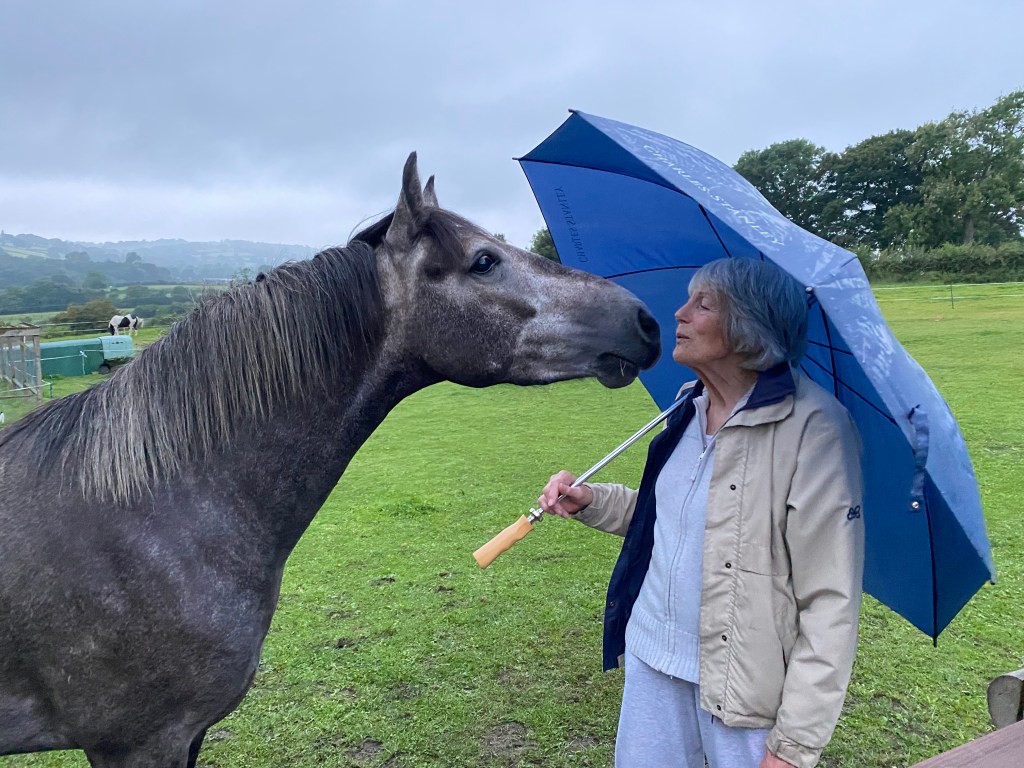
    Chatting to grannie and his first introduction to an umbrella – I think he was quite keen to investigate if it was edible