Enter Lindsay stage left – Because every pony deserves a fairy godmother………..
The first lesson, we walked. And walked. In fact, we halted for most of it. I remember thinking, This is a bit weird… I mean, I know we’re not exactly Grand Prix ready, but a whole lesson at the walk?
But here’s the thing – I was completely fascinated. What Lindsay was teaching me made sense in a way nothing else had. Let’s be honest, the traditional “he should be able to do this by now” approach hadn’t exactly been a roaring success, had it?
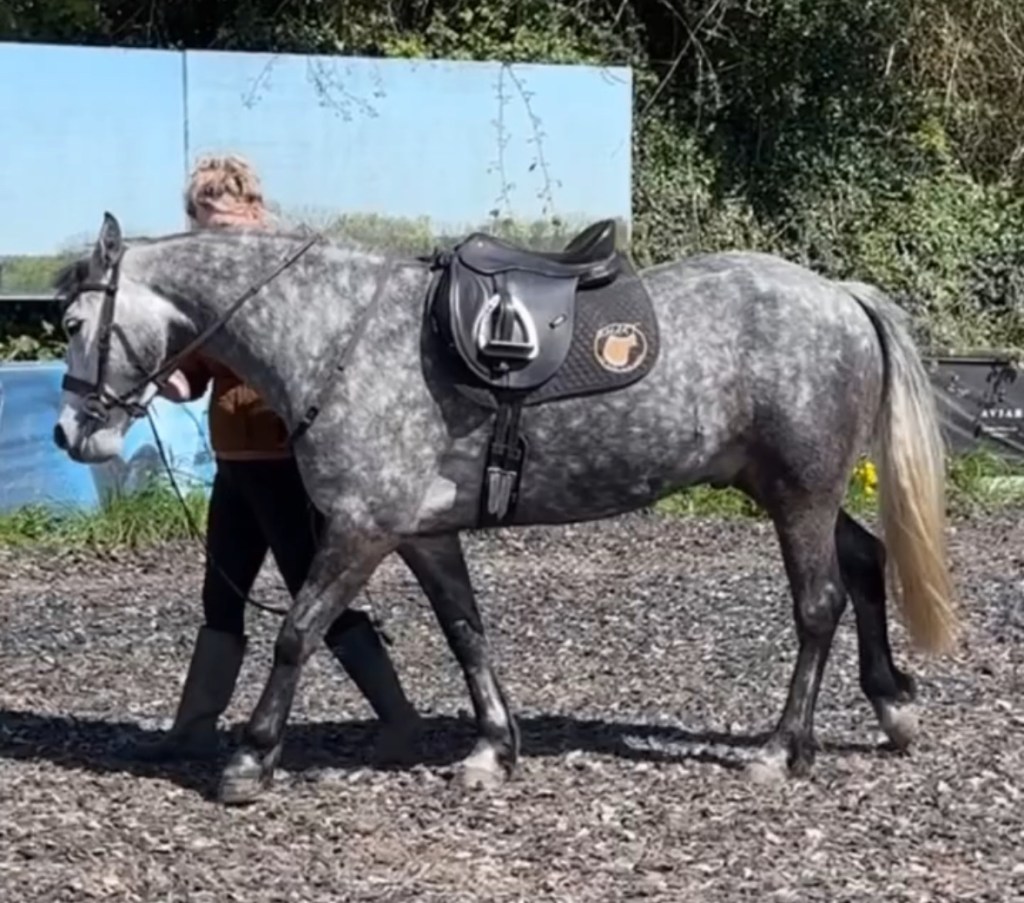
Working from the ground with Lindsay. With focus on Mac’s very stiff shoulders.
Finding Our Feet
One of the many bits of luck in this journey is that Lindsay’s yard is only about 15 minutes from me. So I was able to travel there for lessons, much easier logistically, and a lot more inspiring.
The first time I arrived, though, I’ll admit I felt a bit overwhelmed. I walked through the smart stable yard, big dressage horses peering over the doors at me and Mac. There we were: my little Connemara and me, a 50-something rider who’s a bit of a jack of all trades, and definitely not a master of any.
But Lindsay quickly put me at ease. She said she was happy to teach most horses and riders, as long as they were open to learning. That mattered. That meant something.
Hooked on the Walk
We booked a second lesson later that month. Again, we walked. Again, I was hooked.
Lindsay has this quietly brilliant way of communicating. She brings with her an encyclopaedic knowledge of horse bodies, human bodies, and how they move in harmony. Add to that her calm confidence and an instinctive understanding of what both horse and rider need, and you’ve got a pretty powerful combination. It’s all delivered with empathy, kindness, and a good dose of humour.
By the end of that second session, I knew two things:
- I had a lot to learn.
- I’d found the teacher I’d been looking for.
A Diagnosis
At the start of our third lesson, Lindsay gently suggested something I hadn’t considered, she thought Mac might have PSSM2. It’s a condition more commonly seen in warmbloods, and she recognised the signs right away; two of the horses she rides have a confirmed diagnosis.
At one point, Lindsay rode Mac herself. I was both relieved and horrified to see that even with her in the saddle, he still moved down the long side like a banana, curved and bent when he should’ve been straight. On one hand, I was secretly pleased, it wasn’t just my riding. On the other, I was worried: If he’s still like that with her, surely there’s something seriously wrong…
By the time the results arrived, we were already managing him as if he had PSSM2. Daily low level exercise, we added high-quality magnesium, amino acids and liquid vitamin E to his diet. Sure enough, the test confirmed he was n/P2.
I was devastated.
But Lindsay was calm and reassuring.
“Don’t worry,” she said. “He can still have a normal life. You just need to manage the symptoms—and accept that it will take him longer then other horses to reach each milestone.”
A New Routine
The results came in December 2023. By then, I had already:
- Started moving him daily—sometimes just 30 minutes in-hand
- Adjusted his diet with PSSM-specific supplements
- Watched the weather forecast like a hawk and rugged him accordingly
We continued to visit Lindsay a couple of times a month, focusing on groundwork to build strength. In between visits, we kept hacking the hills.
And gradually, over the winter, we began to see improvement.
Changing Me Too
But the transformation didn’t stop with Mac.
Lindsay also found me a place in her Equipilates class. I’d done a year of online rider Pilates and dipped in and out of yoga over the years, but this was something different. Weekly, live, in-person classes with the same person retraining my riding? I was thrilled.
And I had no idea how much it would change me.
Eighteen months in, I’m straighter, more flexible, and stronger than I’ve ever been. It’s always been said I walk like a farmer (fair!), and my shoulders were notoriously rounded. We’ve worked on those shoulders a lot. A lifelong friend, who’s also a physio and has known me since I was 11, recently noted my posture is better than she’s ever seen it.
I’ll admit it: I’m a little obsessed.
I have all the equipment at home and aim to complete two additional online classes from the Equipilates library each week. I even have a pre-ride routine to get myself ready to be the rider Mac deserves.
As Lindsay would say: “Be the rider your horse would choose.”
And outside the yard? I’m pain-free, strong, supple, and found myself dancing around the kitchen last weekend feeling more like a ballerina than a farmer.

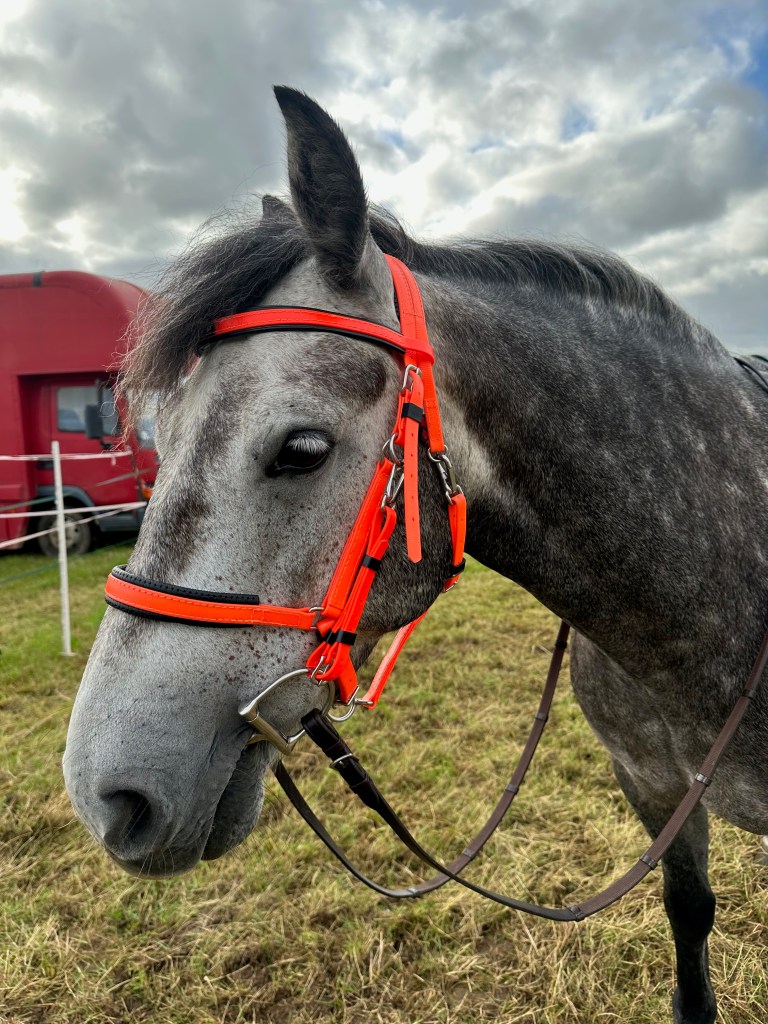
 Mac and Me