Early Days – Strong Feet and First Shoes
When Mac came to us in 2020, he was two years old with lovely, strong, well-shaped small feet and great conformation. Having recently returned to horse ownership after a long break, I set about re-educating myself on modern horse care methods and management. One area that kept coming up was barefoot horses – with growing numbers of people moving away from traditional metal shoes and a large amount of research suggesting that going barefoot was better for the horse.
Despite this knowledge gradually seeping in, when Mac was about four and a half, he had his first set of metal shoes. I was advised: “It’s stoney around here, you don’t have a school to ride in – he’ll never cope barefoot.” He had about three sets of shoes that first year before being turned away to rest over the winter.
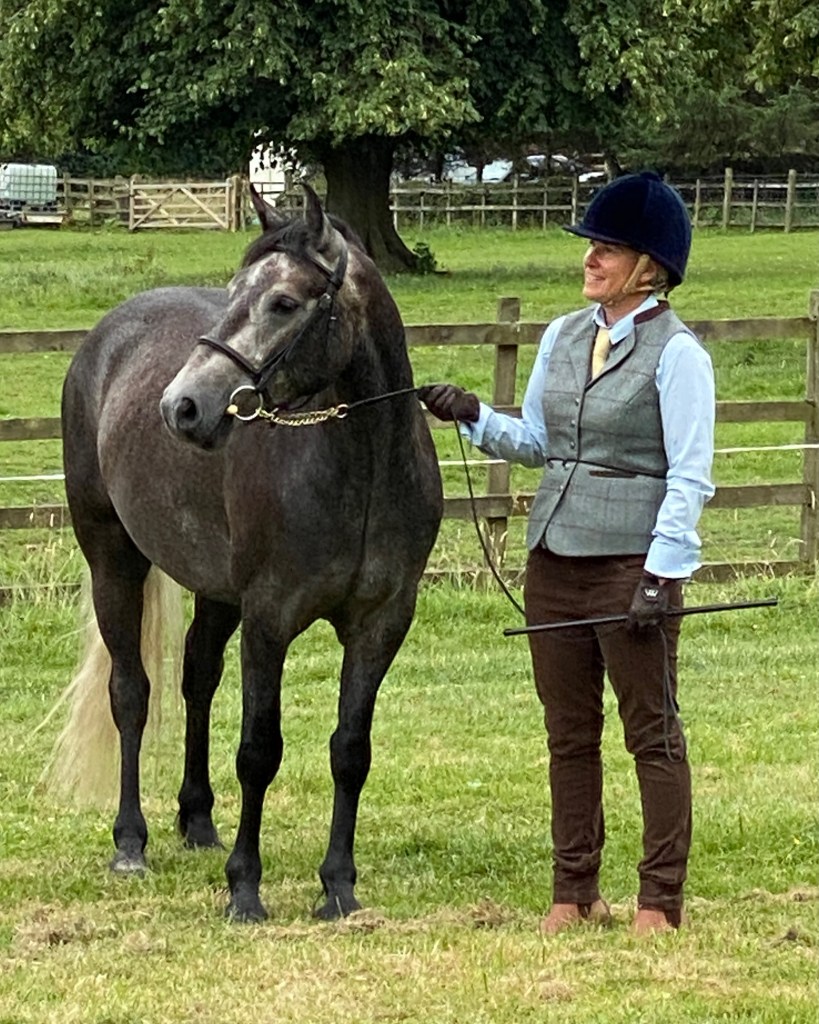
Shoeing and Ridden Issues
In spring 2023, we shod him again. This was the year he turned five – and the year when his ridden issues really started to show. As time went on, I learned more and more about barefoot principles and methods. Mac had begun standing camped under, and it was suggested to me that he might have NPA (Negative Palmar Angle).
This is when the coffin bone angles down at the back of the hoof instead of slightly up – uncomfortable for the horse and potentially damaging in the long term, adding too much pressure to the back of the foot and potentially causing issues further up the leg if allowed to continue.
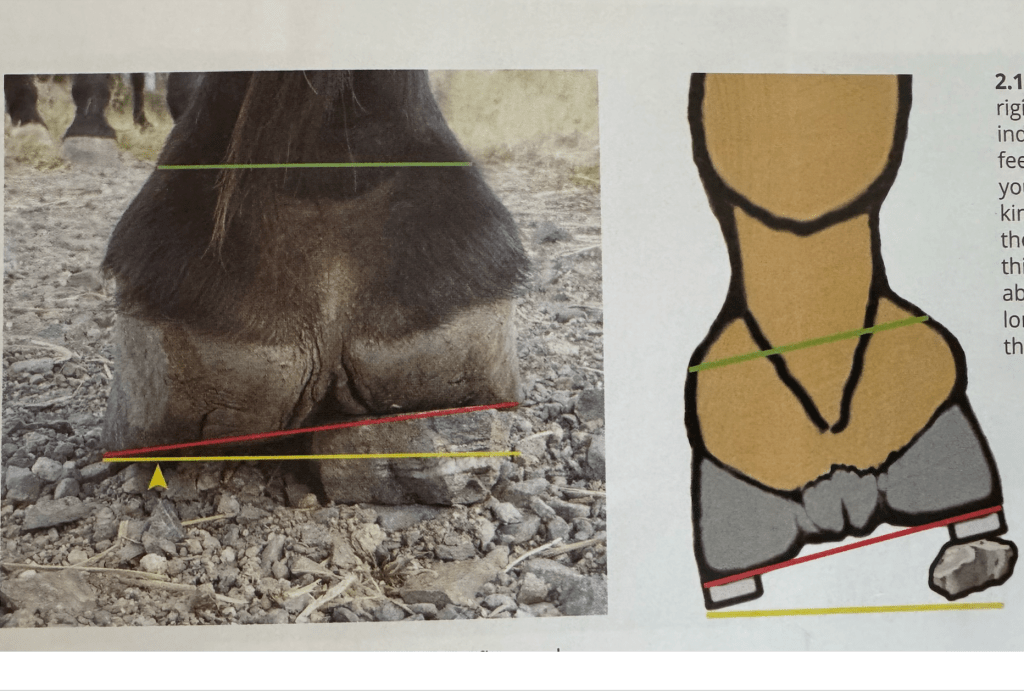
image credit “The Essential Hoof Book”
Removing the Shoes
January 2024, I made the decision to remove his shoes. Hoof boots helped tremendously – though my timing was questionable. On the plus side, winter ground is softer, helping horses transition to barefoot. On the downside, we’d bought boots slightly too large (the foot can change shape when not constrained by a rigid inflexible object) so Mac could “grow into them” – not ideal when you’re trying to canter on a muddy bridlepath!
Transitioning Barefoot
Mac was a difficult fit for boots, with his small, upright feet. After some trial and error, we found that Explora Magics were the best option – very adjustable and able to accommodate slightly higher heels than Scoot Boots (the brand many people start with). With the help of Equine Podiatrist Georgina Ridal, and a smaller set of boots, we were finally on the right track.
Going barefoot takes time and commitment. In the early stages it feels like an extra faff – pulling boots on and off, especially in winter when they’re full of mud. But this stage doesn’t last forever. Over time, as the foot strengthens, the boots are needed less and less.
Working with Georgina, I became more confident that barefoot could work for us.
Learning About the Digital Cushion
One of the key issues was that Mac had very little digital cushion (the area between the bone at the back of the foot and the frog). You can check this by putting your thumb in the dent above the bulbs of the heel and your finger halfway down the frog – ideally this should measure 6–7 cm deep. Mac’s was only 3–4 cm.
When Mac was shod, his frog quickly lost contact with the ground, which is essential for circulation, shock absorption, and grip. Removing metal shoes addressed this immediately, allowing the frog to engage again.
Diet and Hoof Health
Diet plays a crucial role in hoof health. Horses that consume too much sugar – for example from rich grass – can quickly become “footy” on harder ground. Being barefoot adds another tool for monitoring the horse’s overall health: imbalances further up the body often show themselves in asymmetrical hoof balance.
Over time, Mac’s feet became stronger with more ground contact. We used boots only for long, stoney rides, gradually riding more and more barefoot.
One Year On – Rock Cruncher!
Fast forward a year, and Mac’s feet are now true rock crunchers. He no longer wears boots, even on long fun rides of two and a half hours over stoney tracks. He stands correctly, his hoof structure continues to strengthen, he has regained his lovely floaty trot movement, and he is clearly more comfortable.
I’m now a complete barefoot convert – and removed the shoes from our other pony over a year ago too.
Further Information & Resources
If you’d like to learn more about barefoot principles and hoof health, these resources are a great place to start:
- The Essential Hoof Book – a clear, practical guide for horse owners.
- Mark Johnson Farrier – Another Way – Facebook page and podcast sharing insights into modern hoof care.
- Lindsay Fields Study of the Equine Hoof Facebook page.
A Note of Caution
While most horses are able to transition successfully to barefoot, some may not. It’s important to work with a qualified Equine Podiatrist. In the early stages they may need to visit every 3–4 weeks. They will assess the horse in movement and pay close attention to foot balance – often making very small, precise adjustments. Equine podiatrists are trained in the latest science of hoof and foot morphology and can also advise on a hoof-healthy diet, and their guidance can make all the difference to a successful barefoot journey.
 Mac and Me