Where Are We Now?
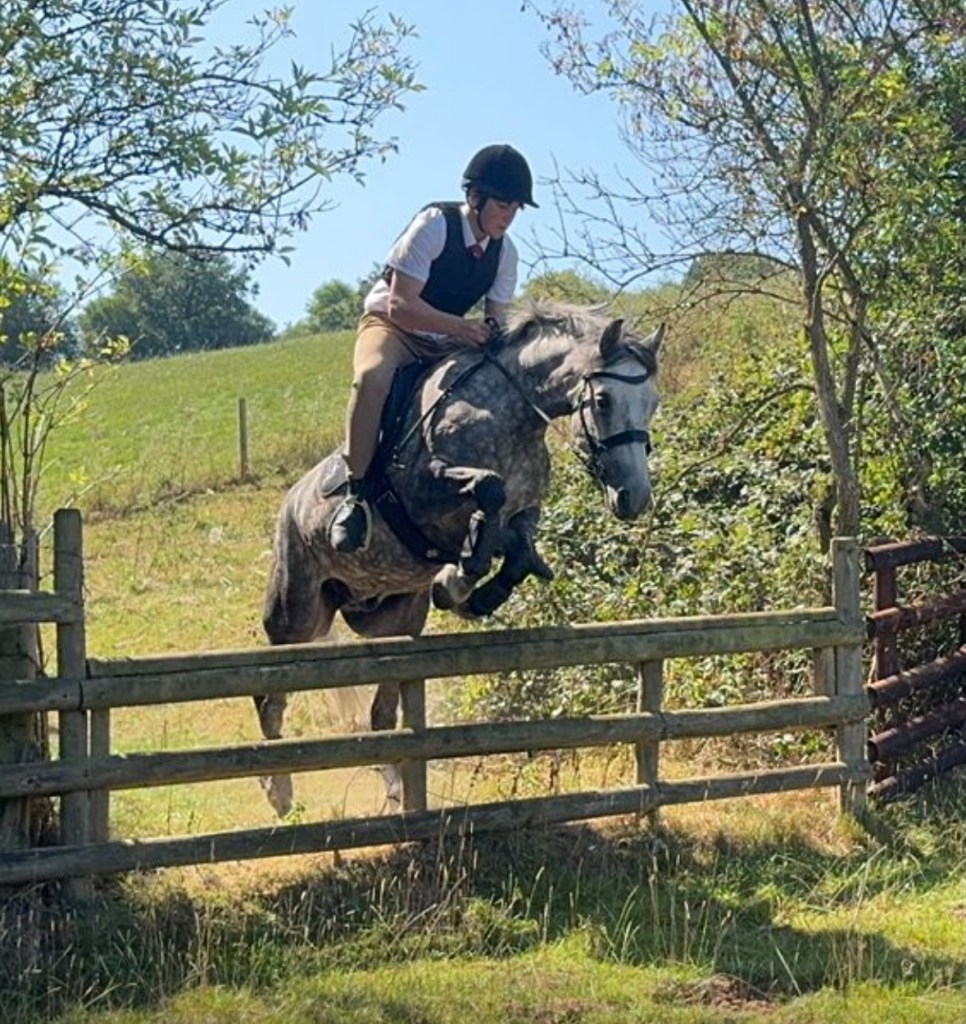
It’s now a year since meeting Alex and beginning treatment for KPU, and both Mac’s wider team and I feel there have been very positive changes over the last 12 months.
On the ground, he is bright and interested again, carrying his head higher and showing more flexibility through his shoulders. This translates into his ridden work, where he feels brighter, holds himself better through the front end, and is able to flex more easily through his shoulders and neck.
He also seems less affected by the weather and is now in a more manageable work pattern. At weekends he enjoys two to three-hour fun rides, and during the week he hacks three times.
On Friday we returned to Lindsay, who was keen to assess Mac again as I’d been keeping her updated on his progress over the summer.
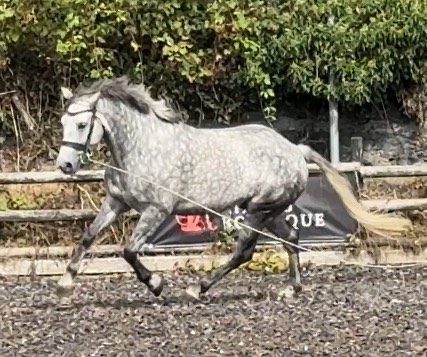
We began with groundwork: large circles in trot and canter to loosen him up, before moving into smaller circles in a very steady trot with his head low. The aim of these exercises is to encourage Mac to release through his spine and lumbar region. There were plenty of visible releases, including softening through his jaw and mouth.
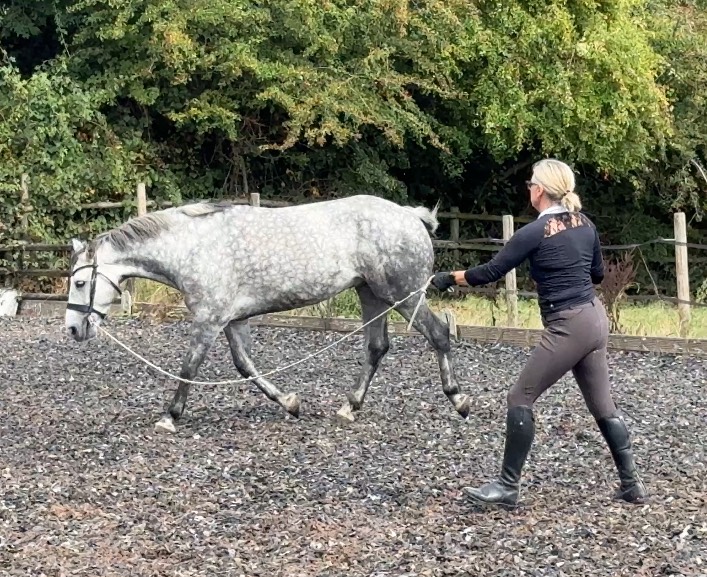
When a horse relaxes the jaw and tongue, it does much more than ease tension in the head. This area is connected to the rest of the body via the hyoid apparatus – a small set of bones that support the tongue and link, through muscles and fascia, to the skull, neck, sternum, shoulders, and indirectly to the hindquarters. Because of this connection, a release in the jaw can influence balance, posture, and movement through the whole body. Restrictions in this area may limit freedom in the shoulders and reduce overall coordination, while relaxation supports freer, more balanced movement from poll to hindquarters.
With the groundwork going well, we tacked up and worked briefly under saddle. We started with some walking and trotting with head low, then moved on to quarter turns around the forehand using a block as a marker. This simple exercise has many benefits: it improves suppleness by encouraging Mac to release through his neck, shoulders, and hindquarters, while also building strength as he crosses and engages his hind legs. It helps balance and coordination by teaching him to shift his weight and pivot around his front legs, and it also increases responsiveness to leg aids. Importantly, turns on the forehand lay the foundation for more advanced lateral movements and collection, making them an excellent tool for developing flexibility and preparing for future schooling.
We kept the ridden session short — just 10 to 15 minutes — and were both pleased with how he went. My homework for the week is to continue with the groundwork and add a small amount of ridden work. We’ll return to Lindsay next Friday to build on this progress.

 Mac and Me