Tag: KPU in horses

  • Mac’s KPU Journey – One Year On: Progress and Positive Changes (August 2025)

    Where Are We Now?

    It’s now a year since meeting Alex and beginning treatment for KPU, and both Mac’s wider team and I feel there have been very positive changes over the last 12 months.

    On the ground, he is bright and interested again, carrying his head higher and showing more flexibility through his shoulders. This translates into his ridden work, where he feels brighter, holds himself better through the front end, and is able to flex more easily through his shoulders and neck.

    He also seems less affected by the weather and is now in a more manageable work pattern. At weekends he enjoys two to three-hour fun rides, and during the week he hacks three times.
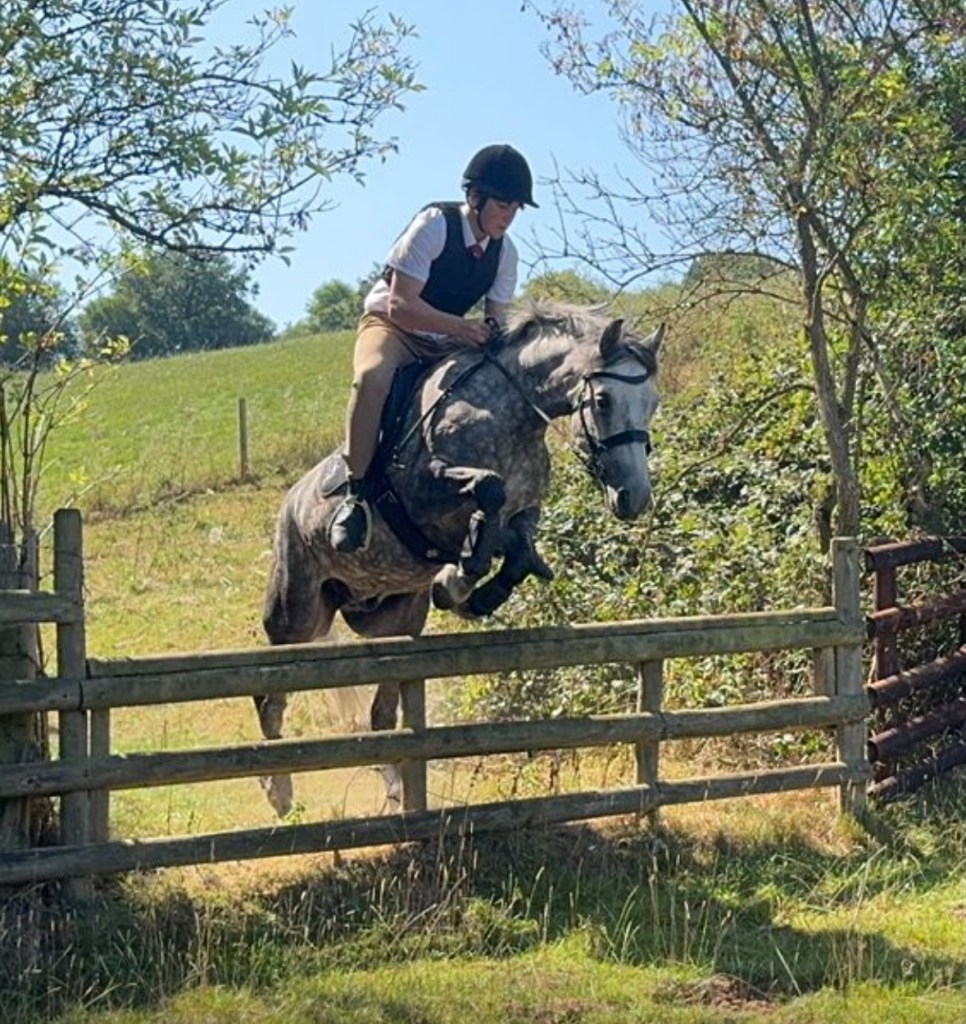
    Bill and Mac – fun ride August 2025

    On Friday we returned to Lindsay, who was keen to assess Mac again as I’d been keeping her updated on his progress over the summer.

    We began with groundwork: large circles in trot and canter to loosen him up, before moving into smaller circles in a very steady trot with his head low. The aim of these exercises is to encourage Mac to release through his spine and lumbar region. There were plenty of visible releases, including softening through his jaw and mouth.
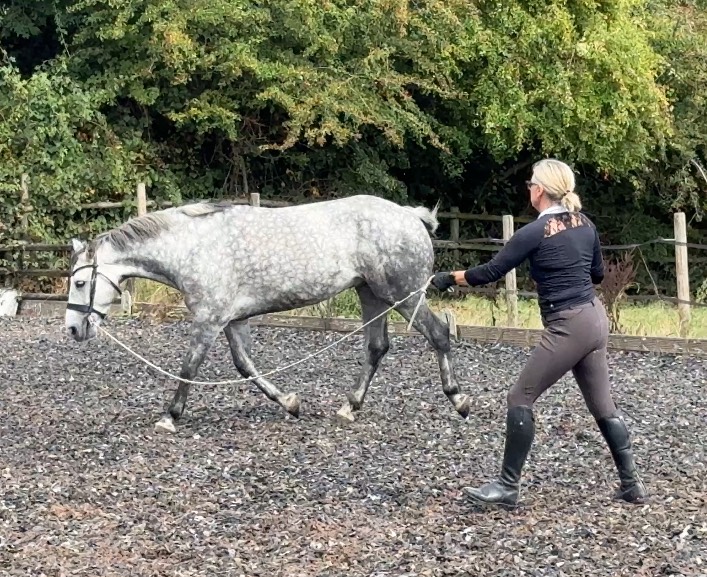
    Trotting in a large circle encouraging head low

    When a horse relaxes the jaw and tongue, it does much more than ease tension in the head. This area is connected to the rest of the body via the hyoid apparatus – a small set of bones that support the tongue and link, through muscles and fascia, to the skull, neck, sternum, shoulders, and indirectly to the hindquarters. Because of this connection, a release in the jaw can influence balance, posture, and movement through the whole body. Restrictions in this area may limit freedom in the shoulders and reduce overall coordination, while relaxation supports freer, more balanced movement from poll to hindquarters.
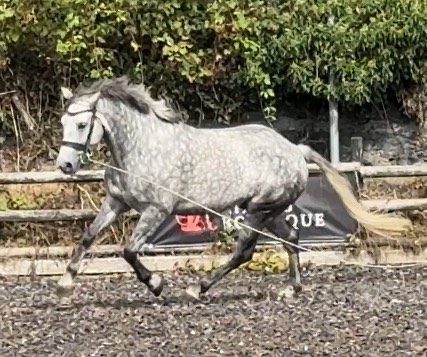
    Canter work from the ground

    With the groundwork going well, we tacked up and worked briefly under saddle. We started with some walking and trotting with head low, then moved on to quarter turns around the forehand using a block as a marker. This simple exercise has many benefits: it improves suppleness by encouraging Mac to release through his neck, shoulders, and hindquarters, while also building strength as he crosses and engages his hind legs. It helps balance and coordination by teaching him to shift his weight and pivot around his front legs, and it also increases responsiveness to leg aids. Importantly, turns on the forehand lay the foundation for more advanced lateral movements and collection, making them an excellent tool for developing flexibility and preparing for future schooling.

    We kept the ridden session short — just 10 to 15 minutes — and were both pleased with how he went. My homework for the week is to continue with the groundwork and add a small amount of ridden work. We’ll return to Lindsay next Friday to build on this progress.

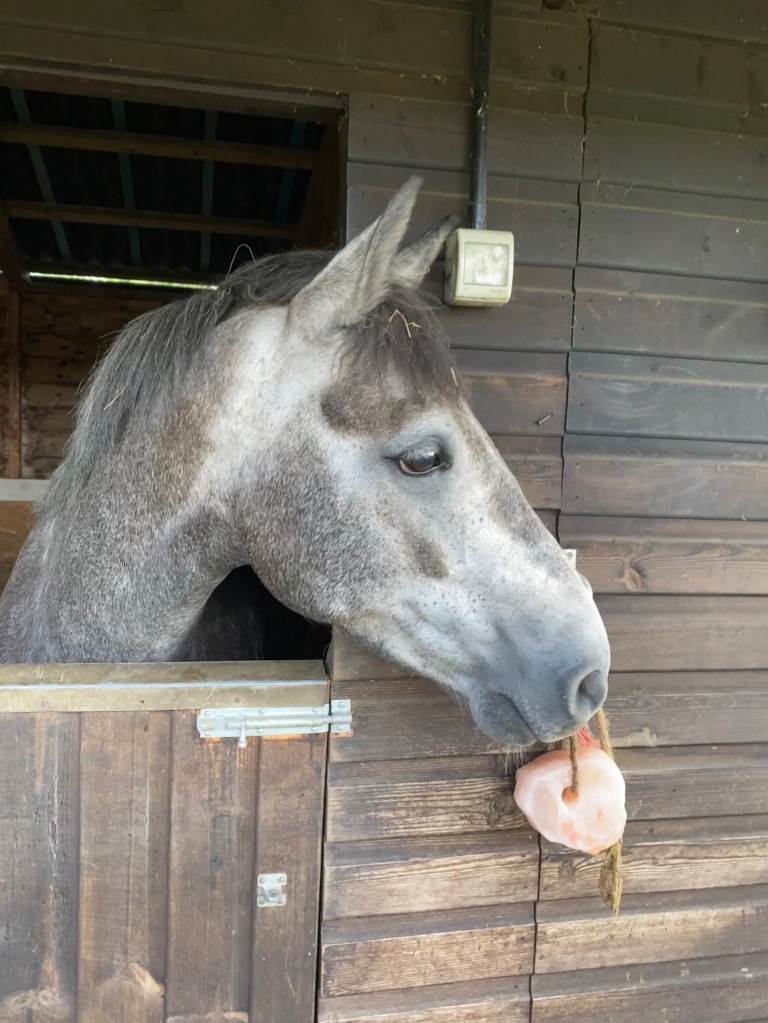
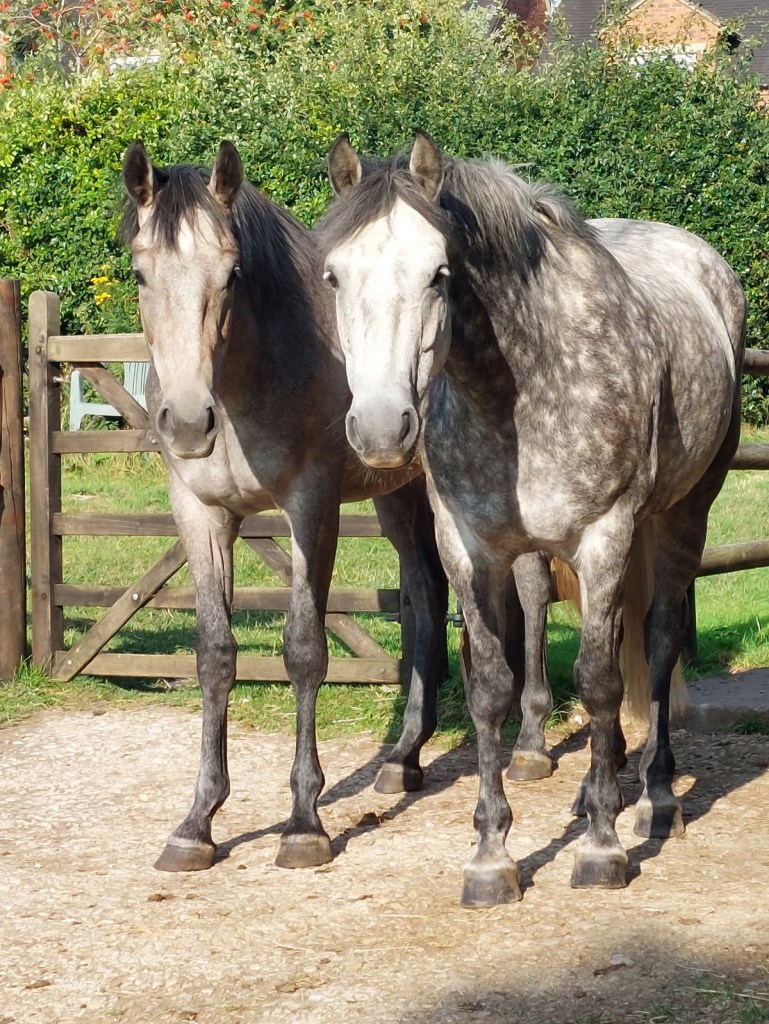
    More head low trot

  • Mac’s Journey – Blood Test Results, Ulcer Treatment, and First Steps on the KPU Protocol

    While I waited for Mac’s plan to arrive, I’d already been advised to remove beet pulp as his main bucket feed and replace it with sainfoin pellets – nutrient-rich and excellent for aiding digestion. I thought I could see improvements from this change alone.


    The Surprising Start – Treating Ulcers

    When the diet plan arrived from Alex and Dr Fritz, I was surprised to see that the first step was treating Mac for stomach ulcers. I’d always been careful to feed ad-lib hay and to prevent ulcers as best I could. But when I thought about it, it made sense – if Mac had been living with low-level pain from the muscle stiffness and fatigue he’d shown in his ridden career so far, ulcers could easily have developed as a secondary condition.

    At this point, all other supplements had been removed. I began the ulcer protocol as advised.

    If you are not familiar with KPU or why it was part of our approach, you can read my full explainer here: Understanding KPU in Horses – A Guide for Equestrians.


    A Setback in Schooling

    We went for a coaching session with Lindsay and I was disheartened to see Mac back to the “banana shape” we’d seen a year ago. I quickly phoned Alex, who reassured me this was part of the process.

    We had removed the “sticking plaster” of his usual supplements – the ones that helped with symptoms but did nothing to treat the cause. For now, the priority was to stop asking too much of him and wait for improvements as the therapy moved through its cycle.


    Less Work, More Healing

    Alex also gave me some wonderful news – Mac no longer needed daily exercise. After over a year of riding or working him every single day, this felt like a huge relief. As a part-time pony owner, full-time mum, and working in our family business, getting him out daily had been a significant commitment. I was thrilled to be released from that pressure.


    Moving Through the Protocol

    Once the ulcer treatment was complete, we moved on to detoxification. After that, the focus shifted to restoring his hindgut with specific herbs designed to stabilise the colon and improve gut flora.

    The entire process was mapped out over 18 weeks, with the goal of completing by March 2025, Alex made me very aware that this was just the start of the process and full recovery could take up to a year. In the meantime, we kept things simple – hacking out, following the plan, and monitoring Mac’s progress.


    Early Changes

    The changes became apparent fairly early on. At first, Mac became brighter on the ground – there was a sparkle in his eye, and his head and neck started to lift higher on his shoulders. As we moved through the program, I noticed he began to swing his neck more freely, even turning to look at me when I was behind him in the stable – I realised this was something I’d not seen him do for along time.

    We avoided schooling work, continuing with hacking instead. His flexibility improved and he seemed much happier in himself. Our wider support team – the physio and trimmer (he is barefoot, but that is a story for another post) – all commented that he felt softer, more supple, and easier to work with.

    I was thrilled. It was working. He was happier, healing, and that was all that mattered to me.


    A Note on Support in the UK

    It must be said – and the cynic in me cannot ignore – that pharmaceutical companies make no money from you exercising your horse daily, adding an extra rug, feeding good-quality natural vitamin E, or using herbal supplements, there are no drugs developed by the pharmaceutical companies that “fix” this issue.

    This is why it is absolutely essential to find a well-qualified and knowledgeable Equine practitioner to guide you on this journey.

    If you want to learn more about KPU, you can find my full guide here: Understanding KPU in Horses – A Guide for Equestrians.