The Training Method Behind “Mac and Me”
At “Mac and Me,” we use a training method called Equitation Science—a modern, evidence-based approach that’s rooted in how horses actually think, learn, and behave. It’s the method our trainer, Lindsay, uses to help us build a calm, cooperative, and ethical partnership with Mac and our other horses.
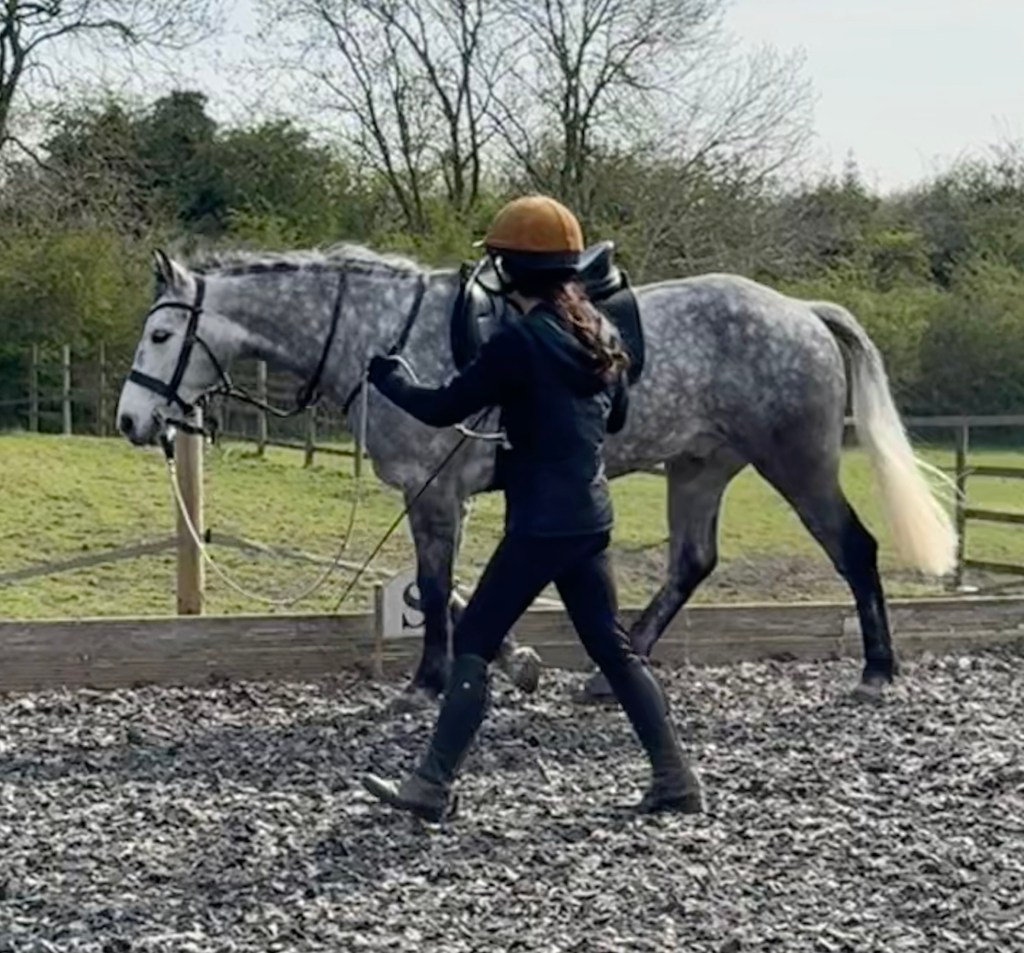
Here Dani is working from the ground to help Mac improve his straightness.
What Is Equitation Science?
Equitation Science is a discipline that combines learning theory (how animals learn) with ethology (natural behaviour of animals) to develop training methods that are both effective and humane. Rather than relying on tradition, guesswork, or dominance-based approaches, Equitation Science prioritises clarity, consistency, and horse welfare.
The key idea is simple: when we train in a way that horses can understand, we reduce confusion, stress, and conflict. That’s better for the horse—and for the rider.
Who Developed It?
Equitation Science was developed through the combined efforts of Paul McGreevy, Andrew McLean, Janne Winther Christensen, and Uta König von Borstel. These researchers, with their backgrounds in animal behaviour, veterinary science, and equine management, have collaborated to create a more ethical and evidence-based approach to horse training and management. Andrew, an Australian equestrian who was once an international event rider, brought scientific principles into horse training after studying animal learning and behaviour. His background is unique—he also works with elephants and other species, applying the same evidence-based techniques across different animals.
Andrew co-founded the Equitation Science International (ESI) school, and his work has reshaped how we think about ethical and effective horse training.
Lindsay regularly works remotely with Manuela McLean (Andrew’s wife and co-developer of the ESI framework) to apply these same principles to her horses. Manuela is a respected trainer and coach who specialises in rider education and equine behaviour. Lindsay helps us bring the science into practice with Mac—step by step, day by day.

Lindsay explaining to Dani how to help Mac bend and move his shoulders
How Does Equitation Science Work?
At its heart, Equitation Science is about making training logical and fair from the horse’s point of view. Horses learn through well-understood processes such as:
- Operant Conditioning: using rewards and consequences to reinforce behaviour.
- Classical Conditioning: pairing cues with actions so the horse can anticipate what to do.
- Habituation: helping horses become calm and non-reactive to new or scary things.
- Shaping: teaching more complex behaviours in gradual, manageable steps.
A big focus is on timing and clarity—giving signals (aids) in a consistent way and releasing pressure the moment the horse responds correctly. This helps horses learn quickly and with minimal stress or confusion.
Core Principles We Follow
Some of the key Equitation Science principles that guide our work with Mac include:
- Train one response at a time – Too many signals at once can overwhelm the horse.
- Use consistent cues – Horses learn faster when we’re predictable.
- Be precise with timing – Release pressure or reward immediately when the horse does the right thing.
- Avoid interpreting behaviour through human emotion – Horses aren’t “being naughty”; they’re often confused, scared, or unsure.
- Build trust and reduce fear – Good training should leave the horse more confident, not more anxious.
Why We Use It
Since we started working with Lindsay and using Equitation Science, we’ve noticed big changes:
- Mac is calmer, more focused, and more willing.
- Training sessions are shorter and more productive.
- We feel safer and more in tune with our horses.
- There’s less tension—for both horse and human.
It’s not always flashy, and it’s certainly not the quick fix we sometimes try to find theses days, but it works—and it puts the horse’s welfare at the centre of everything we do.
A Better Way Forward
Equitation Science is about more than getting results—it’s about how we get them. It’s about being thoughtful, ethical, and kind in our training. For us at “Mac and Me,” that’s what good horsemanship looks like.
If you’re curious to learn more, check out Equitation Science International or follow along with our blog as we continue to learn from Mac and from this brilliant, science-based approach to equine training.

 Mac and Me