PSSM2
PSSM2 (Polysaccharide Storage Myopathy Type 2) is a term many horse owners hear — but few fully understand until they find themselves living with it. For us, the signs were there early on, but they didn’t fit the classic “textbook” version. It’s part of what makes this condition so hard to spot and easy to dismiss.
This page shares what I noticed in Mac, both in hindsight and as it unfolded. I hope it helps you feel less alone if your horse is showing similar signs.
Early Signs (Before Backing)
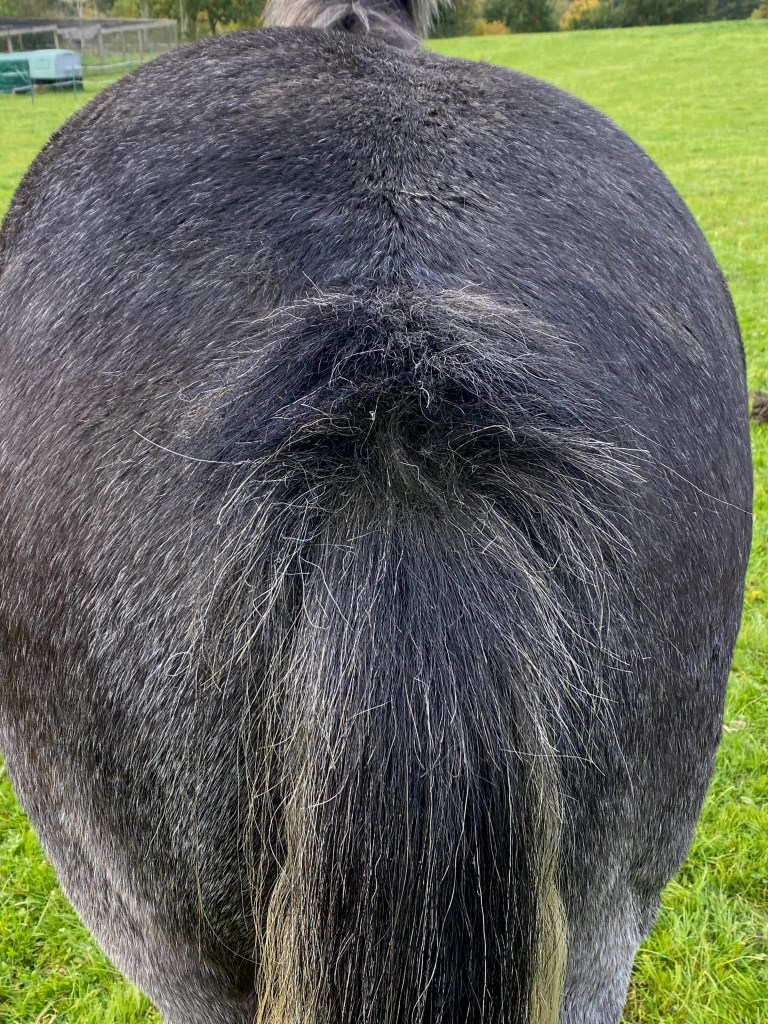
- Extreme itchiness: He was constantly rubbing his head, tail and body. I suspected sweet itch and tried every herbal remedy under the sun. Some helped a bit, but the itchiness never fully resolved.
- Low-level fly reactions: Even mild fly bites caused swelling or irritation. He always seemed uncomfortable in summer, despite good fly protection.
- Laid down frequently: More than other young ponies I’d known. At the time, it didn’t seem concerning — just something I noticed.
- Disliked bad weather: Wet, cold, or windy days made him visibly miserable. He would shut down completely in poor conditions.
After Backing
Once we started riding Mac, the contrast to his earlier behaviour was striking.
- Dull under saddle: He went from engaged and present to flat and unmotivated as soon as we started ridden work.
- No natural progression: We followed a careful program of hill walking and strength-building, but he simply didn’t get fitter or stronger.
- Traffic-safe but lacking energy: He was excellent in traffic — calm and unbothered — but felt flat and disinterested overall.
- Canter was especially difficult: He struggled particularly on the left rein, he could not complete a large circle in the arena.
- No bend or softness: He didn’t bend through his head, neck, or shoulders — it felt like riding a plank of wood.
- Riding issues linked to tack: We tried three different tree’d saddles, all fitted by qualified fitters, but each made him crooked — almost banana-shaped. Bareback, he moved straighter and with more ease.
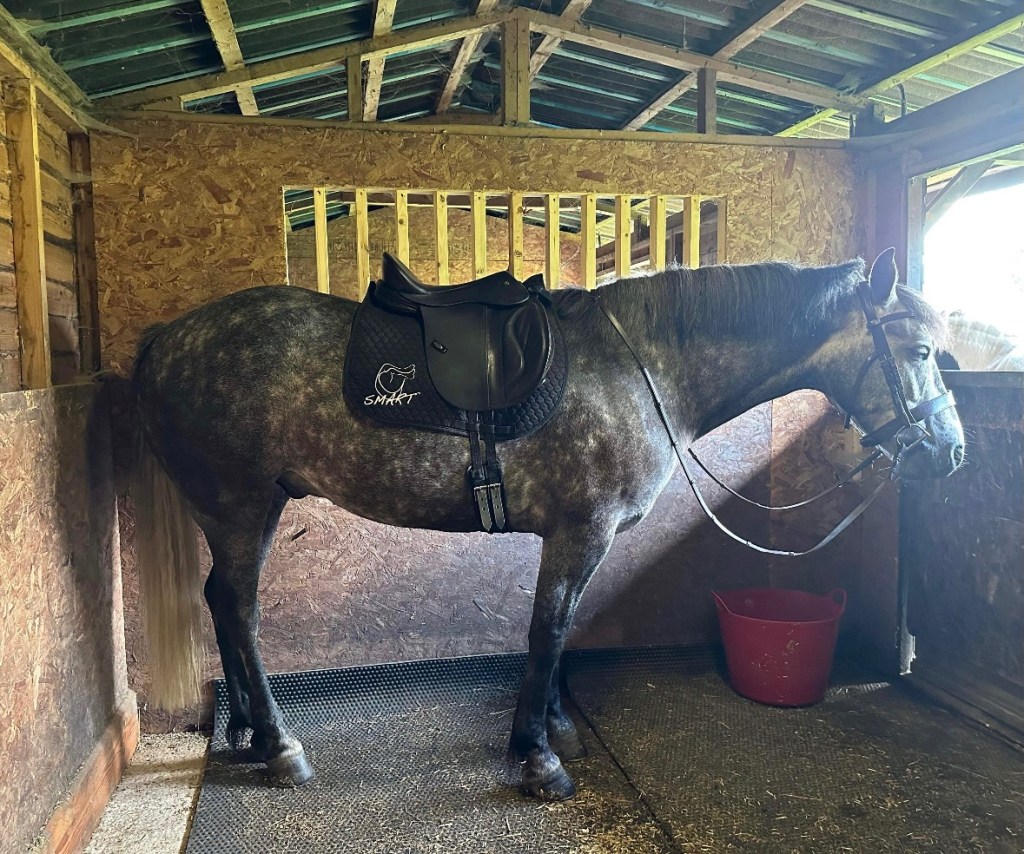
Camped under, head low and looking depressed
During Rest Period (Winter Worsening)
We turned him away over winter, and that’s when things began to add up.
- Strange posture: Often standing camped under or shifting his weight.
- Muscle loss: Notably along his topline and across his hindquarters, despite little workload.
- Low head carriage even at rest.
- Dull eyes and withdrawn mood: He no longer looked like the happy, curious youngster we’d brought home.
- Subtle but persistent discomfort: There was no single “big” symptom, just a collection of things that didn’t feel right.
More Than Just “Training Issues”
At first, I questioned whether I was doing something wrong — maybe he wasn’t ready, maybe I was rushing. But the more we tried, the clearer it became: this wasn’t a training issue.
We ruled out the obvious:
- Saddle fit — changed repeatedly
- Hoof balance — regularly checked and well-managed
- Ulcers — considered and supported for
- Training methods — thoughtful, varied, and horse-led
Still, things didn’t improve. The canter work was inconsistent. He moved better without a saddle than with one. His body just wouldn’t respond the way it should.
Eventually, we began to explore deeper metabolic and muscular issues — and that led us to a diagnosis of PSSM2.
(Later, we would learn about KPU, which offered an even more complete picture — more on that to come.)
Why I’m Sharing This
Mac never tied up. He wasn’t explosive. He didn’t behave “badly.” But something was clearly wrong — and if you’re here reading this, you may be feeling the same with your own horse.
If that’s the case, trust your gut. These small symptoms, when viewed together, tell a story. And there is a path forward.
What You Can Do Next:
- Bookmark this page — we’ll keep updating it as I remember and learn more.
- Share it with other owners who may be dealing with mysterious symptoms.
- Leave a comment or question below — I’d love to hear about your horse’s journey.
Let me know when you’re ready to upload it or if you’d like help selecting an image to go with it — something that illustrates a key symptom perhaps (posture, condition, or movement).
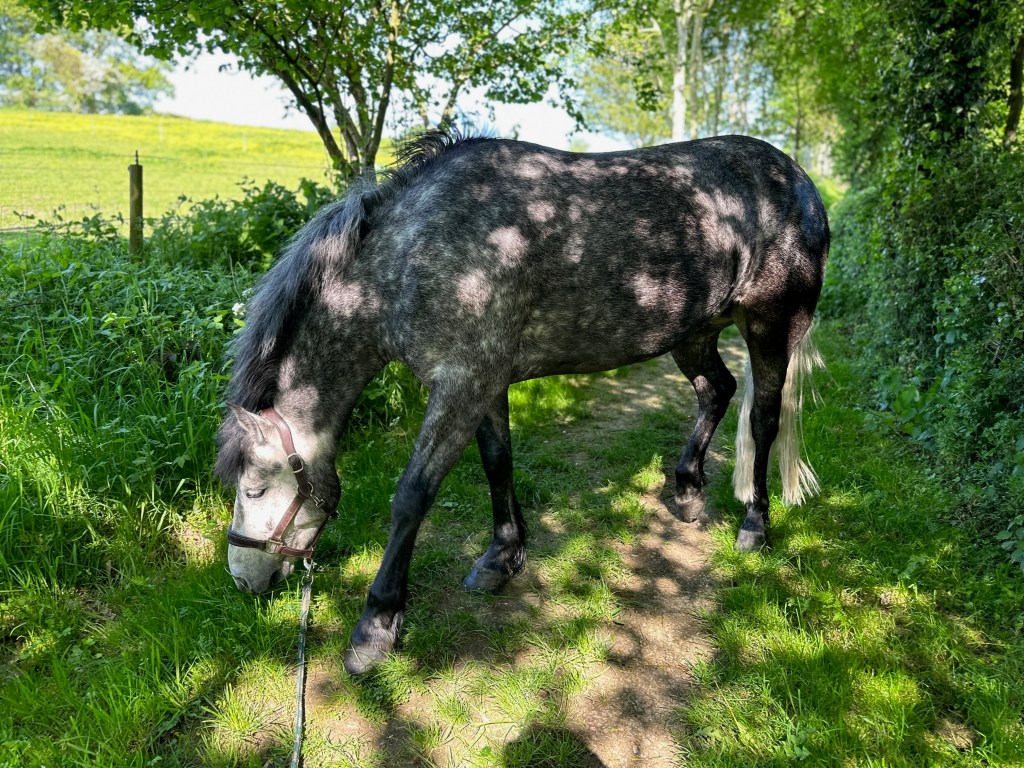
 Mac and Me